Finger-Prick vs Venous Blood Tests: Which Is More Accurate?
When it comes to blood testing, what you measure matters. But how your blood sample is collected matters too.
Blood testing has become more accessible than ever.
From at-home finger-prick kits to comprehensive venous blood tests, there are now more ways to investigate your health without necessarily visiting your GP.
26 Oct 2026
Convenience is an important part of making healthcare accessible. But when blood test results are being used to investigate symptoms, understand hormone levels or monitor treatment, another question becomes just as important:
Does the way your blood sample is collected affect the reliability of your results?
Finger-prick and venous blood tests both have legitimate clinical uses. However, they are not automatically interchangeable for every biomarker, and differences in collection methods, sample quality and laboratory handling can influence the results.
Understanding those differences can help you make a more informed decision about which testing method is appropriate for your health needs.
Quick Facts
- Finger-prick tests collect capillary blood, whereas venous blood tests collect blood directly from a vein.
- Finger-prick testing can provide reliable results when the collection method and laboratory assay have been appropriately validated.
- Sample contamination, haemolysis, insufficient blood volume and incorrect handling can affect blood test reliability.
- Certain hormones, including testosterone and oestradiol, can be affected by the type of collection tube used.
- Venous sampling is often preferable for comprehensive blood panels, specialist biomarkers and tests requiring larger sample volumes.
- Neither testing method should be assessed on convenience alone. The correct method depends on the biomarker, the laboratory process and how the result will be used.
What Is the Difference Between Finger-Prick and Venous Blood Testing?
The main difference is where the blood comes from and how the sample is collected.
Finger-Prick Blood Testing (Capillary Sampling)
A finger-prick blood test involves using a small lancet to puncture the skin, usually at the fingertip.
Small droplets of blood are then collected into a microtube, onto a collection card or directly into a testing device, depending on the type of test.
This is known as capillary blood sampling.
Capillary blood collected from the skin is not identical in composition to blood taken directly from a vein. It can contain a mixture of blood from small arterial and venous vessels, with the potential for contamination by surrounding tissue fluid during collection.
Finger-prick testing has several advantages, particularly when only a small quantity of blood is required.
It is commonly used for blood glucose monitoring, certain point-of-care tests and selected laboratory tests where capillary collection has been validated.
However, not every laboratory test is suitable for a capillary sample.
Venous Blood Testing (Venepuncture)
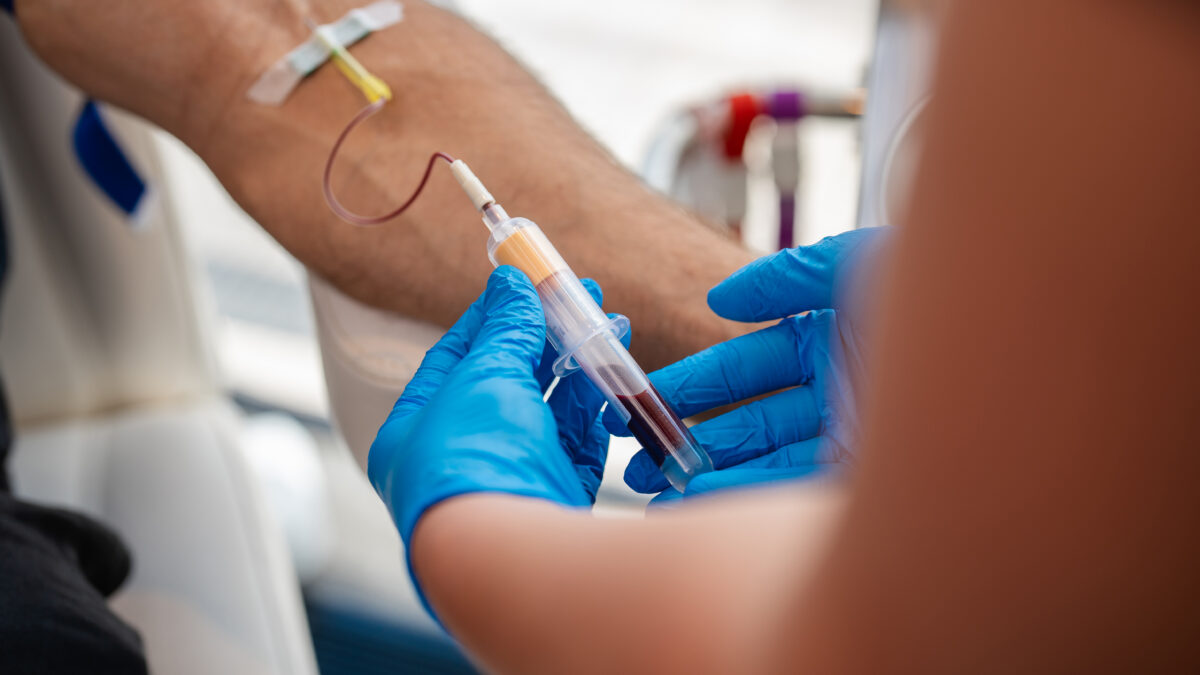
Venous blood testing involves collecting blood directly from a vein, usually in the arm, using a needle and appropriate collection tubes.
It is the established method used for a wide range of routine and specialist laboratory investigations.
Venous collection typically allows larger sample volumes to be obtained and provides flexibility when multiple biomarkers or different sample types are required.
It also allows samples to be collected into specific tubes designed for different laboratory analyses, helping meet the requirements of individual tests.
Although venous sampling requires a trained professional and may be less convenient than a self-collected finger-prick sample, it is particularly useful for comprehensive blood testing and ongoing clinical investigations.
Finger-Prick vs Venous Blood Tests: A Comparison
| Feature | Finger-Prick Testing | Venous Blood Testing |
| Sample type | Capillary blood | Venous blood |
| Collection method | Small lancet puncture | Needle inserted into a vein |
| Blood volume | Usually small | Generally larger |
| Collection setting | Often suitable for home collection | Clinic or professional home collection |
| Biomarker suitability | Depends on laboratory validation | Suitable for a broad range of established assays |
| Sample quality considerations | Sensitive to collection technique and small sample volumes | Requires correct technique, tubes and handling |
| Comprehensive panels | May be limited by sample volume or assay requirements | Often more suitable |
| Clinical reliability | Can be reliable for validated tests | Established standard for many routine laboratory tests |
The important distinction is not that one method is always accurate and the other is not. It is whether the sample collection method is appropriate for the test being performed.
Are Finger-Prick Blood Tests Accurate?
Yes, finger-prick blood tests can be accurate.
However, accuracy depends on more than whether a sample was taken from a finger or a vein.
The laboratory must establish that the particular collection method produces results suitable for the intended clinical purpose.
This includes assessing whether capillary and venous results are sufficiently comparable, whether the sample remains stable during transportation and whether different reference ranges or interpretation methods are required.
In 2026, the Association for Laboratory Medicine published UK recommendations addressing the validation and adoption of capillary blood testing within routine clinical laboratories.
The recommendations recognise the potential value of capillary testing in making healthcare more accessible, while emphasising that laboratories need appropriate evidence and validation before using capillary samples for tests ordinarily performed on venous blood.
This is particularly relevant because an assay originally validated for venous blood cannot automatically be assumed to perform identically with a capillary sample.
In other words, a reliable laboratory test requires both a suitable sample and a validated method of analysis.
What Can Affect the Accuracy of a Finger-Prick Blood Test?
The process of collecting and transporting blood is known as the pre-analytical phase of testing.
Errors introduced during this stage can influence the sample before laboratory analysis even begins.
Several factors are particularly important in capillary blood collection.
1. Haemolysis: When Red Blood Cells Break Down
Haemolysis occurs when red blood cells rupture, releasing their contents into the surrounding blood sample.
This can happen for several reasons, including collection technique, excessive pressure on the fingertip or inappropriate sample handling.
Haemolysis can interfere with the measurement of certain biomarkers.
For example, it may cause falsely elevated potassium results because red blood cells contain substantially more potassium than the surrounding plasma.
Other biomarkers can also be affected, depending on the degree of haemolysis and the laboratory method being used.
Haemolysis can occur in both venous and capillary samples. However, collecting small quantities of blood from a finger can introduce additional challenges if the finger is repeatedly squeezed to obtain sufficient blood.
2. Tissue Fluid Contamination
When collecting a finger-prick sample, excessive squeezing or massaging of the fingertip can introduce surrounding tissue fluid into the sample.
This may dilute the blood or alter the concentration of some measured substances.
The World Health Organization specifically advises against squeezing the puncture site too tightly because this can increase the likelihood of haemolysis and contamination with tissue fluid.
This does not mean every finger-prick test is affected. It highlights why proper collection technique is essential.
3. Insufficient Sample Volume
Some blood tests require more blood than others.
Collecting a small capillary sample can be straightforward for an individual measurement, but more challenging when several biomarkers are being assessed.
If the collected sample is insufficient, the laboratory may be unable to perform all the requested analyses.
Small sample volumes can also create challenges where testing requires specific proportions of blood and tube additives.
For comprehensive health panels involving several different types of laboratory analysis, venous sampling may therefore be more appropriate.
4. Sample Handling and Transportation
The quality of a sample does not depend solely on how the blood is collected.
The time between collection and analysis, storage temperature, collection tubes and transport conditions can also affect laboratory results.
Some biomarkers are relatively stable under specified conditions, while others are more sensitive to delays or inappropriate handling.
With at-home finger-prick testing, the sample may need to be collected by the patient and transported to a laboratory.
The laboratory must therefore ensure that the relevant biomarkers remain stable under the conditions expected during that journey.
Importantly, venous samples also require suitable handling and transportation. Neither collection method is immune to pre-analytical errors.
Can Finger-Prick Blood Tests Affect Hormone Results?
Hormone testing is an area where sample collection methods deserve particular consideration.
Hormones such as testosterone and oestradiol are frequently measured when investigating reproductive health, menstrual irregularities, fertility concerns and hormone replacement therapy.
Their interpretation can be influenced by several factors, including the timing of the blood test, medications, hormonal treatments and the analytical method used.
Collection tubes may also play a role.
What Does the Research Show?
A study published in The Journal of Applied Laboratory Medicine in 2025 investigated the effects of different blood collection tubes on nine fertility-related biomarkers.
The researchers compared capillary and venous samples, including tubes with and without serum separator gel.
They found that, when comparing capillary tubes containing separator gel with capillary tubes without gel, measured concentrations were approximately:
13% lower for oestradiol
8% lower for testosterone
Importantly, the same study did not identify statistically significant differences attributable to tube type for the other seven hormones investigated.
This distinction matters.
The research did not demonstrate that all finger-prick hormone tests are unreliable. Instead, it identified a specific interaction between certain hormone measurements and the type of sample collection tube.
The study was relatively small, so its findings should be interpreted within that context.
Nevertheless, it reinforces an important clinical principle:
The collection method, sample container and laboratory assay must be suitable for the biomarker being measured.
This can be particularly relevant when results are being used to monitor hormonal changes or support decisions about treatment.
What About HRT and TRT Monitoring?
For individuals undergoing hormone replacement therapy (HRT) or testosterone replacement therapy (TRT), consistency is important.
Hormone concentrations may vary according to the treatment formulation, dosage schedule, time since administration and timing of blood collection.
Using a consistent, clinically appropriate testing method can help make serial results more meaningful.
Topical hormone preparations can also contaminate blood samples if hormone residue is present near the collection site. This is a consideration for both finger-prick and venous sampling.
Anyone using topical hormonal treatments should follow their clinician’s instructions about application sites and timing before blood testing.
Where test results will be used to assess medication effectiveness or adjust treatment, the collection method should be agreed with the treating clinician and laboratory.
Is Venous Blood Testing More Reliable?
Venous blood collection is the established standard for many routine and specialist blood tests.
However, it would be incorrect to suggest that venous testing is universally more accurate for every measurement.
Some capillary tests have well-established clinical uses, including finger-prick blood glucose monitoring.
For other biomarkers, appropriately validated capillary laboratory methods may also produce results that are sufficiently comparable with venous testing.
The advantage of venous collection becomes particularly relevant when a test requires a larger sample volume, multiple collection tubes or an assay developed and validated specifically for venous blood.
Venous sampling can also reduce some of the challenges associated with obtaining sufficient blood through repeated finger squeezing.
But choosing a venous sample does not eliminate every potential source of error.
Clinical reliability comes from matching the right collection method with the right laboratory analysis, appropriate sample handling and meaningful interpretation.
When Should You Consider a Venous Blood Test?
Venous blood testing may be preferable in several circumstances.
Comprehensive Health Screening
A comprehensive health assessment may involve numerous biomarkers across several areas of health, including hormones, thyroid function, liver and kidney health, nutrient status and cardiovascular risk.
These investigations may require more blood or different sample types than a standard finger-prick collection can conveniently provide.
Investigating Persistent Symptoms
Symptoms such as fatigue, menstrual irregularities, unexplained weight changes or reduced energy can have multiple possible causes.
A healthcare professional may recommend specific investigations rather than relying on a broad, non-targeted test panel.
When several laboratory measurements are clinically indicated, venous sampling may provide a practical way to collect the necessary samples.
Monitoring Hormonal Treatment
For individuals monitoring HRT, TRT or other hormone-related treatments, testing methods should be selected according to the relevant clinical and laboratory requirements.
Consistency in sampling conditions can help make repeated measurements easier to interpret.
Specialist Biomarker Testing
Some specialist tests have specific collection, processing or sample-volume requirements.
Before choosing a testing method, it is important to confirm whether the relevant laboratory accepts and has validated that type of sample.
Why Does My Atlas Use Venous Blood Testing?
At My Atlas, we believe that making proactive healthcare accessible should never mean overlooking the clinical details that influence test quality.
That is why our blood testing services use venous blood collection performed by a qualified phlebotomist or nurse, rather than self-collected finger-prick samples.
This approach allows us to support a broad range of routine and specialist blood panels while meeting the collection requirements of our laboratory partners.
Clients can access blood testing through our Wilmslow clinic, participating partner locations or professional home blood collection arrangements where available.
Samples are analysed by our accredited laboratory partners, with results presented in a detailed report to help you understand your measured biomarkers.
And importantly, testing is only one part of understanding your health.
Results should be considered alongside symptoms, medical history, medication use, lifestyle and other relevant clinical information.
Where additional guidance is needed, My Atlas also provides access to GP consultations to help put results into context and discuss appropriate next steps.
Our approach is simple: proactive health made simple, without losing sight of clinical suitability.
Frequently Asked Questions
Are finger-prick blood tests as accurate as venous blood tests?
They can be, depending on the biomarker, collection technique and laboratory assay.
Certain capillary tests are well validated and widely used. However, results from capillary and venous samples should not be assumed to be interchangeable for every biomarker.
Can finger-prick blood tests give incorrect results?
Yes, as can venous blood tests.
Inadequate collection, haemolysis, sample contamination, incorrect storage or unsuitable transport conditions can affect results. The risk and impact vary according to the test being performed.
Are finger-prick hormone tests reliable?
Some hormones can be measured reliably using appropriately validated capillary methods.
However, research has identified differences in testosterone and oestradiol measurements associated with particular capillary collection tubes. The suitability of the testing method should therefore be confirmed for the specific hormone and laboratory assay.
Is a finger-prick test suitable for cholesterol testing?
Some cholesterol measurements can be performed using validated capillary or point-of-care methods.
However, comprehensive lipid investigations may require additional biomarkers or specialist laboratory analysis, making venous collection more appropriate depending on the panel.
Should I repeat an abnormal finger-prick blood test?
An unexpected result should be reviewed in the context of your symptoms, medical history and the method used.
A healthcare professional may recommend repeat or confirmatory testing, which could involve a venous sample, depending on the biomarker and clinical circumstances.
Do not alter prescribed treatment solely because of an unexpected home-testing result without appropriate medical advice.
Can I have a blood test at home without using a finger-prick kit?
Yes.
My Atlas offers home testing options where a qualified healthcare professional takes a venous blood sample.
Availability depends on location and the test being requested.
The Bottom Line: Your Results Are Only as Useful as the Sample Behind Them
Finger-prick blood testing has an important place in modern healthcare.
It can make certain tests more accessible, reduce the need for clinic visits and provide reliable information when the method has been appropriately validated.
But convenience and clinical suitability are not always the same thing.
The reliability of a blood test depends on several factors, from the collection method and sample volume to the laboratory assay, sample handling and circumstances in which the result will be interpreted.
For comprehensive health assessments, specialist biomarkers and certain forms of clinical monitoring, venous sampling may be the more appropriate choice.
Ultimately, the aim of blood testing should not simply be to obtain a result.
It should be to obtain information that is reliable, relevant and meaningful for your health.
Your health is a journey. Your results are only the beginning.
Understand Your Health with My Atlas
Explore our range of venous blood tests, with professional sample collection, accredited laboratory analysis and access to GP consultations when further guidance is needed.
Learn How Our Tests Work
This article provides general educational information and does not replace individual medical advice. Blood test selection and interpretation should reflect the individual’s clinical circumstances.
Related Products
Here are some of our products relating to this topic.


Latest Insights
Stay up to date with latest research, tips and trends in health and nutrition.