The Estrobolome: How Your Gut Microbiome Controls Your Oestrogen Levels
The Estrobolome is a collection of gut bacteria that regulate oestrogen metabolism - read what they do, what disrupts them, and why the health of your gut microbiome is inseparable from your hormonal health.
7 May 2026
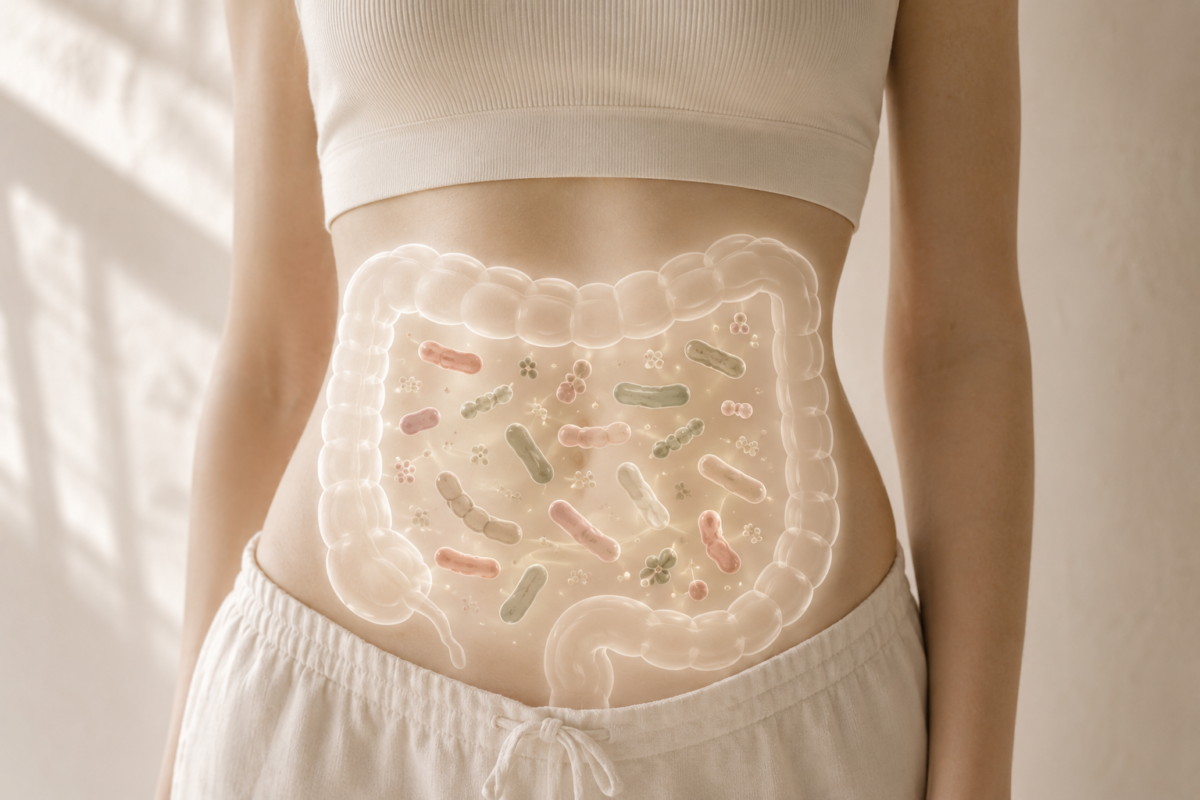
Quick Facts
• The estrobolome is the collection of gut bacterial genes whose products are capable of metabolising oestrogen.
• Gut bacteria produce an enzyme called beta-glucuronidase (β-glucuronidase), which deconjugates oestrogen in the gut and returns it to active circulation via enterohepatic recirculation.
• An overactive estrobolome increases circulating oestrogen and is associated with oestrogen-driven conditions including endometriosis, uterine fibroids, and hormone receptor-positive breast cancer.
• An underactive estrobolome – or disrupted oestrogen metabolism more broadly – is associated with insufficient oestrogen availability, which contributes to menopause symptoms, bone loss, and cardiovascular risk.
• Postmenopausal women show significantly reduced gut microbiome diversity and altered estrobolome function, with implications for cardiometabolic health
• Diet, antibiotic exposure, chronic stress, and alcohol are among the most significant modifiable influences on estrobolome composition.
When people talk about hormone balance, the conversation tends to focus on the ovaries, the liver, or the endocrine system. Rarely does it begin with the gut. Yet an accumulating body of research now places gut microbiome health at the centre of oestrogen regulation — and understanding why requires understanding the estrobolome.
The estrobolome is not a single organ or pathway. It is the aggregate of microbial genes within the gastrointestinal tract whose protein products are capable of metabolising oestrogen and oestrogen-related compounds. The estrobolome determines how much active oestrogen re-enters systemic circulation after hepatic processing — making it a critical regulator of oestrogen exposure throughout the body.
For women experiencing hormonal symptoms — heavy or irregular periods, PMS, endometriosis, perimenopause, unexplained mood changes, or conditions associated with oestrogen excess or deficiency — gut health is not a peripheral consideration. It is, increasingly, a central one.
Oestrogen -A Brief Overview
Oestrogen is not a single hormone but a family of structurally related steroid hormones. The three biologically active forms in humans are estradiol (E2), the dominant and most potent form in premenopausal women; estrone (E1), the principal oestrogen in postmenopausal women, produced primarily in adipose tissue; and estriol (E3), a weaker form that is predominantly produced during pregnancy.
Oestrogen is produced primarily in the ovaries, but also in adipose tissue, the adrenal glands, and through peripheral conversion, in a range of other tissues. It governs the development and regulation of the female reproductive system, bone density maintenance, cardiovascular protection, cognitive function, mood regulation, skin integrity, and immune modulation.
Like all steroid hormones, oestrogen must be broken down and cleared from the body after it has exerted its effects. This clearance process (oestrogen metabolism) – involves the liver, the gut, and the bacteria that live within it. When any stage of this process is disrupted, the downstream consequences are felt across multiple systems.
How Oestrogen Is Metabolised – The Liver-Gut Axis
Oestrogen metabolism is a sequential, multi-phase process. Understanding each stage is essential for understanding where the estrobolome fits — and where disruption has the most clinical impact.
Phase 1 – Hepatic Hydroxylation
In the liver, oestrogen undergoes hydroxylation via cytochrome P450 (CYP450) enzymes, producing one of three metabolite forms. The 2-hydroxyestrone (2-OH) pathway is considered the favoured route — producing metabolites with weak oestrogenic activity that are more readily cleared.
The 4-hydroxyestrone (4-OH) pathway produces metabolites with greater potential for DNA damage and is associated with increased cancer risk when dominant. The 16-alpha-hydroxyestrone (16α-OH) pathway produces metabolites with strong oestrogenic activity and receptor-binding affinity, associated with oestrogen-driven tissue proliferation.¹
The balance between these pathways is influenced by genetics, diet, body composition, and environmental exposures. A diet rich in cruciferous vegetables – broccoli, cauliflower, kale – promotes the 2-OH pathway through indole-3-carbinol (I3C) and diindolylmethane (DIM). Obesity, alcohol, and certain environmental toxins shift metabolism toward the 4-OH and 16-OH pathways.
Phase 2 – Conjugation
Phase 1 metabolites are chemically reactive and require further processing before they can be safely excreted. In Phase 2, the liver conjugates oestrogen metabolites — primarily via glucuronidation (adding a glucuronic acid molecule via UDP-glucuronosyltransferase enzymes) and methylation (via the COMT enzyme, which neutralises 2-OH and 4-OH catecholestrogens). Sulphation is a secondary pathway.²
Glucuronidation is the predominant conjugation pathway. It renders oestrogen water-soluble, biologically inactive, and ready for biliary excretion. This conjugated oestrogen then travels from the liver through bile into the small intestine — and this is where the estrobolome enters.
Phase 3 – Enterohepatic Recirculation and the Estrobolome
Under healthy conditions, conjugated oestrogen arriving in the intestine is partially excreted in faeces and urine. But gut bacteria carrying the gene for β-glucuronidase can deconjugate these oestrogens — cleaving the glucuronic acid tag and regenerating free, biologically active oestrogen. This deconjugated oestrogen is then available for reabsorption across the intestinal wall and back into systemic circulation, in a process called enterohepatic recirculation.³
This is not inherently pathological. Enterohepatic recirculation is a normal regulatory mechanism that helps maintain adequate circulating oestrogen. The clinical problem arises when the balance shifts — when β-glucuronidase activity is too high (increasing oestrogen reabsorption and systemic exposure) or when estrobolome function is depleted (reducing reabsorption and contributing to insufficient circulating oestrogen).
The Estrobolome – What It Is and How It Works
The term ‘estrobolome’ was first defined as the aggregate of enteric bacterial genes whose products are capable of metabolising oestrogens.⁴ At its core, the estrobolome is defined by β-glucuronidase (GUS) activity — the enzymatic capability of gut bacteria to deconjugate oestrogen glucuronides back into their active forms.
A 2019 study published in PNAS provided the first comprehensive experimental evidence for the estrobolome hypothesis, demonstrating that 35 different human gut microbial GUS enzymes could reactivate two distinct oestrogen glucuronides — estrone-3-glucuronide and estradiol-17-glucuronide — into estrone and estradiol respectively.⁵ This confirmed that the estrobolome is not theoretical: gut bacteria actively and measurably participate in oestrogen metabolism.
Multiple bacterial genera contribute to β-glucuronidase activity in the gut, including Bacteroides, Bifidobacterium, Lactobacillus, Escherichia coli, Clostridium, and Ruminococcus. The balance and diversity of these populations — and therefore the overall β-glucuronidase activity of the estrobolome — is directly shaped by diet, antibiotic use, chronic stress, alcohol consumption, and numerous other modifiable factors.⁶
A Bidirectional Relationship
The relationship between oestrogen and the gut microbiome is not one-directional. Oestrogen shapes the composition of the gut microbiome — promoting diversity, supporting beneficial Lactobacillus and Bifidobacterium populations, and maintaining mucosal integrity. The gut microbiome, in turn, modulates circulating oestrogen through the estrobolome.
Research has demonstrated this bidirectionality clearly. Studies in mice show that postmenopausal mice have reduced gut microbiome diversity, which partially restores with oestrogen administration. A large cross-sectional analysis of 2,300 participants in the Hispanic Community Health Study found that postmenopausal women showed significantly reduced gut microbiome diversity and depletion of β-glucuronidase estrobolome genes compared to premenopausal women — with the postmenopausal microbiome resembling that of men more than premenopausal women.⁷ This convergence reflects the shared low-oestrogen state, and its implications for cardiometabolic health are significant.
What Disrupts the Estrobolome?
The estrobolome is sensitive to the same factors that disrupt gut microbiome health more broadly. Several are particularly relevant to clinical practice.
| Factor | Effect on Estrobolome | Clinical Consequences |
| Antibiotic use | Reduces bacterial diversity; depletes β-glucuronidase-producing species | Reduced oestrogen reabsorption; transiently lower circulating oestrogen |
| Low-fibre, high-processed food diet | Reduces microbial diversity and SCFA production; alters β-glucuronidase balance | Disrupted oestrogen metabolism; constipation slows faecal oestrogen excretion |
| Chronic psychological stress | Alters gut motility, mucosal permeability, and microbial composition via HPA axis | Dysbiosis; altered oestrogen recirculation |
| Alcohol | Increases intestinal permeability; alters microbial balance; impairs hepatic Phase 2 conjugation | Increased oestrogen reabsorption; elevated circulating oestrogen |
| Obesity | Alters microbial diversity; increases peripheral oestrogen production in adipose tissue; impairs conjugation | Increased systemic oestrogen exposure; elevated cancer risk |
| Hormonal contraceptives | Reduce endogenous oestrogen; associated with reduced gut microbiome diversity in studies | Altered estrobolome activity during and after use |
| Chronic constipation | Delays faecal excretion of conjugated oestrogens; allows longer window for deconjugation and reabsorption | Increased systemic oestrogen reabsorption |
The Estrobolome and Hormone-Driven Conditions
The clinical consequences of estrobolome disruption are not subtle. Oestrogen-driven conditions, some of the most prevalent chronic conditions affecting women have measurable associations with altered estrobolome function. It is important to state clearly that this is an emerging field: association does not confirm causation in all cases, and direct human mechanistic evidence remains limited for some conditions. But the biological plausibility is strong, and the research base is growing rapidly.
Endometriosis
Endometriosis affects approximately 10% of women of reproductive age and is characterised by oestrogen-dependent growth of endometrial-like tissue outside the uterus.⁸ A 2025 systematic review registered with PROSPERO found that gut microbiota dysbiosis and estrobolome alterations are consistently observed in endometriosis patients, with increased β-glucuronidase activity producing a hyperoestrogen environment that favours lesion persistence and inflammatory signalling.⁸
A 2024 review in Biomolecules noted that overgrowth of β-glucuronidase-producing bacteria may enhance oestrogen metabolite levels, driving oestrogen-related inflammatory states.⁹ Importantly, the relationship appears bidirectional — endometriosis itself may alter gut microbiome composition through inflammatory mediators, creating a self-reinforcing cycle.
PCOS
Polycystic ovary syndrome (PCOS) is the most common endocrine disorder in women of reproductive age, and its relationship with the gut microbiome is an area of active investigation. The estrobolome’s role in PCOS is less direct than in endometriosis — PCOS is characterised by androgen excess relative to oestrogen, rather than oestrogen dominance — but disruption of the gut microbiome has been linked to the metabolic features of PCOS (insulin resistance, inflammation, altered androgen metabolism) that interact with oestrogen balance.
Research has identified Clostridium scindens as a gut bacterium capable of producing testosterone, suggesting the existence of a ‘testrobolome’ that mirrors the estrobolome in sex hormone regulation.¹⁰ Probiotic interventions have shown efficacy in improving hormonal and metabolic markers in PCOS, consistent with microbiome-hormone interaction being clinically modifiable.
Breast Cancer Risk
Over 70% of breast cancers are hormone receptor-positive (HR+), meaning they are driven by oestrogen signalling.¹¹ Elevated circulating oestrogen is one of the most established risk factors for HR+ breast cancer, and the estrobolome’s role in determining circulating oestrogen exposure positions it as a potentially significant modulator of risk.
A 2025 review in the International Journal of Cancer found that increased abundance of β-glucuronidase-producing bacteria leads to elevated levels of circulating oestrogens that can interact with oestrogen receptors in breast tissue.¹² The review acknowledged that while in vitro and animal evidence for this mechanism is robust, direct causation in humans has not yet been definitively established — mechanistic human studies are ongoing and gaps in understanding remain.¹²
This is an important caveat to state accurately. The estrobolome is a plausible and measurable contributor to breast cancer risk via its effect on circulating oestrogen, but it is one factor within a complex multifactorial picture. It should not be presented as a primary cause, nor should estrobolome optimisation be positioned as a protective measure against breast cancer in the absence of stronger clinical evidence.
Menopause and Perimenopause
The menopausal transition is characterised by declining ovarian oestrogen production and a predictable set of systemic consequences. What is less widely appreciated is that menopause significantly alters the gut microbiome — and that these microbiome changes may themselves contribute to the severity of menopausal symptoms and longer-term health risks.
The large Peters et al. study in mSystems (2022) demonstrated that postmenopausal women show reduced gut microbiome diversity, altered overall microbiome composition, and depletion of estrobolome function compared to premenopausal women.⁷ A 2026 review in Nutrients synthesised evidence showing that greater microbial diversity is consistently associated with improved oestrogen regulation, and that interventions restoring diversity — probiotics, prebiotics, dietary phytoestrogens — show potential to mitigate menopausal symptoms.¹³
Reduced estrobolome activity in menopause may compound the effects of ovarian oestrogen loss by reducing the capacity to recirculate what oestrogen remains — contributing to bone density decline, cardiovascular risk, genitourinary symptoms, and cognitive changes beyond what ovarian decline alone would predict.
Bone Health and Cardiovascular Risk
Oestrogen is protective for both bone density and cardiovascular health. The postmenopausal increase in cardiovascular disease risk and accelerated bone loss are well-established consequences of oestrogen withdrawal. The estrobolome connects these risks to gut health: a 2023 study found that Ruminococcus flavefaciens abundance was positively correlated with osteoclastic markers and estrobolome activity, suggesting the gut-oestrogen axis directly influences bone resorption.¹⁴ A 2025 NCBI review confirmed that gut microbiota can influence cardiovascular outcomes in postmenopausal women through oestrogen regulation and systemic inflammation.¹⁵
Supporting Estrobolome Function – What the Evidence Supports
The estrobolome is modifiable. The same factors that disrupt it — poor diet, antibiotic overuse, chronic stress, excessive alcohol — are largely reversible, and a growing evidence base supports specific dietary and lifestyle strategies for optimising oestrogen metabolism. This is an area where clinical evidence is at varying stages of development: some recommendations are well-supported; others reflect strong biological plausibility with emerging human data.
Dietary Fibre
High dietary fibre intake is one of the most consistently supported interventions for oestrogen metabolism. Fibre promotes microbial diversity, supports the growth of beneficial oestrogen-metabolising bacteria, and — critically — increases faecal bulk and transit, reducing the time available for deconjugated oestrogen to be reabsorbed in the colon. Research has demonstrated for decades that high-fibre diets reduce circulating oestrogen concentrations in premenopausal women, an effect attributed largely to reduced β-glucuronidase activity.¹⁶
Cruciferous Vegetables
Cruciferous vegetables – broccoli, brussel sprouts, kale, cauliflower, cabbage contain indole-3-carbinol (I3C) and its intestinal conversion product diindolylmethane (DIM). These compounds promote the 2-OH hydroxylation pathway in Phase 1 liver metabolism, favouring the production of less oestrogenically active and more readily excreted metabolites. They also support Phase 2 glucuronidation and sulphation.
Evidence for I3C and DIM in modifying oestrogen metabolism is well-established in laboratory and observational studies; clinical trial evidence for specific clinical outcomes remains more limited.
Fermented Foods and Probiotics
Fermented foods – yogurt, kefir, kimchi, sauerkraut, miso – contribute live bacterial cultures that support gut microbiome diversity. Lactobacillus species in particular are associated with healthy oestrogen metabolism. Probiotic supplementation has shown benefit in improving hormonal markers in PCOS and in reducing menopausal symptoms in clinical trials, consistent with a gut-oestrogen mechanism.¹³ However, the specific strains, doses, and clinical indications for probiotic use in hormonal conditions are not yet standardised.
Reducing Beta-Glucuronidase Activity
Where excessive β-glucuronidase activity is contributing to oestrogen excess — as in oestrogen-dominant conditions — strategies to reduce this enzyme’s activity are a rational approach. Calcium D-glucarate is a compound found naturally in many fruits and vegetables that inhibits β-glucuronidase activity, thereby reducing oestrogen deconjugation and reabsorption. It is available in supplement form and is widely used in functional medicine practice. Human clinical trial evidence is limited, but the mechanism is well-characterised and plausible.
Supporting Phase 2 Methylation
Efficient Phase 2 conjugation — particularly COMT-mediated methylation of catecholestrogens — requires adequate micronutrient availability: B vitamins (B2, B3, B6, B12), folate, magnesium, and zinc all play roles in supporting methylation pathways. Nutritional deficiencies in these cofactors, common in modern diets, can impair Phase 2 processing and increase the proportion of reactive oestrogen metabolites available for recirculation.
What Testing Can Tell You About Oestrogen Metabolism
Standard blood testing of oestrogen (typically oestradiol or oestrone) provides a snapshot of circulating levels at a single point in time. It does not reveal how oestrogen is being metabolised, which pathways are dominant, or whether β-glucuronidase activity is contributing to excess recirculation. This limits the clinical utility of standard oestrogen measurement for understanding the estrobolome’s contribution to symptoms.
DUTCH Testing
The Dried Urine Test for Comprehensive Hormones (DUTCH) measures oestrogen metabolites in urine alongside free cortisol, androgens, and other markers. It provides information on Phase 1 hydroxylation pathway balance (2-OH, 4-OH, 16-OH ratios) and Phase 2 methylation efficiency. This is substantially more informative than serum oestrogen alone for assessing oestrogen metabolism, though it does not directly measure gut β-glucuronidase activity or estrobolome composition.
Gut Microbiome Testing
Comprehensive stool microbiome analysis can characterise the composition of gut bacterial populations, including species known to encode β-glucuronidase. While this field is developing and clinical interpretation is not yet standardised, it provides a useful picture of overall gut health, microbial diversity, and the presence or absence of key oestrogen-metabolising taxa. Combined with hormonal testing, it can help identify whether a gut-hormone axis contribution to symptoms is likely.
What Standard Testing Does Not Capture
A normal serum oestradiol result does not mean oestrogen metabolism is functioning optimally. Someone with normal circulating oestradiol may have impaired Phase 1 hydroxylation (producing excess 4-OH metabolites), sluggish Phase 2 methylation (allowing reactive metabolites to accumulate), or excessive β-glucuronidase activity (recirculating oestrogen that should have been excreted). These patterns produce symptoms and may affect long-term disease risk without producing an obviously abnormal hormone level.
Frequently Asked Questions
What is the estrobolome in simple terms?
The estrobolome is the collection of gut bacteria that help regulate how much active oestrogen circulates in your body. After the liver processes oestrogen and prepares it for excretion, specific gut bacteria can intercept it and return it to active circulation. The balance of these bacteria determines whether oestrogen is efficiently cleared or whether it continues recirculating and exerting effects on tissues.
Can a disrupted estrobolome cause oestrogen dominance?
Yes, in principle. If β-glucuronidase activity in the gut is elevated, more conjugated oestrogen is deconjugated and reabsorbed rather than excreted.
This increases the total oestrogen exposure of target tissues. The clinical evidence linking this mechanism to symptoms of oestrogen dominance (heavy periods, PMS, breast tenderness, mood changes) is biologically plausible and supported by observational data, though direct causal clinical trials in humans are still limited.
Does gut health affect menopause symptoms?
There is growing evidence that it does. Gut microbiome diversity declines during the menopausal transition alongside falling ovarian oestrogen, and the two processes interact. A less diverse estrobolome has a reduced capacity to support oestrogen recirculation — which may compound the effects of ovarian oestrogen loss. Interventions that support gut microbiome health (fibre, fermented foods, probiotics) are associated with reduced menopausal symptom severity in some studies, though evidence is still at an early stage.
Is this relevant for men?
Yes, though less discussed. Men also produce oestrogen, primarily through peripheral aromatisation of testosterone, and the estrobolome influences male oestrogen levels in the same way. Disrupted oestrogen balance in men has implications for prostate health, cardiovascular risk, and bone density. The concept of a ‘testrobolome’ – gut bacteria influencing testosterone metabolism – is also emerging as a related area of clinical interest.
Can I test my estrobolome directly?
Not yet in a standardised clinical way. Stool microbiome testing can assess the composition of gut bacterial populations including those associated with oestrogen metabolism, but clinical reference ranges and treatment protocols based on estrobolome-specific metrics are not yet established. DUTCH hormone testing provides indirect information about oestrogen metabolism pathways. This is an active area of research and clinical tools are likely to become more sophisticated.
What is the single most important thing I can do to support my estrobolome?
Increase dietary fibre. The evidence base for fibre’s role in supporting microbial diversity, promoting healthy oestrogen metabolism, and reducing circulating oestrogen through improved faecal clearance is more consistent and robust than for any other single intervention. Aim for a diverse range of plant-based fibre sources – vegetables, legumes, wholegrains, fruits, rather than a single fibre supplement.
Final Thoughts
The estrobolome represents one of the most compelling intersections in modern medicine: the relationship between gut health and hormonal health. It explains why two women with identical ovarian hormone production can have profoundly different oestrogen-related symptom profiles. It provides a biological mechanism connecting gut dysbiosis to conditions — endometriosis, PMS, perimenopausal symptoms, breast cancer risk, that have historically been understood as purely hormonal or gynaecological.
It is also an area where clinical science is still maturing. The evidence is strongest for the core mechanism – β-glucuronidase-mediated oestrogen recirculation – and for the associations between dysbiosis and oestrogen-driven conditions.
Direct causal human mechanistic evidence for specific clinical outcomes is still developing, and this should be communicated honestly rather than overstated.
What is clear is that gut health and hormonal health cannot be evaluated in isolation. A normal oestrogen level does not mean oestrogen is being metabolised optimally.
A hormonal symptom pattern may have a gut health component that no amount of hormone testing will reveal. And interventions that support the gut — diet, microbiome diversity, reduced dysbiosis — have a direct and measurable impact on oestrogen regulation.
Your hormones and your gut are not separate systems. Understanding one without the other is understanding only half the picture.
REFERENCES
1. Cytochrome P450 and oestrogen hydroxylation metabolite pathways (2-OH, 4-OH, 16-OH). Modulation of Metabolic Detoxification Pathways Using Foods and Food-Derived Components. PMC. 2015.
2. Phase 2 glucuronidation, methylation and sulphation of oestrogen metabolites. Gut microbial beta-glucuronidase: a vital regulator in female estrogen metabolism. Tandfonline. 2023.
3. Estrogen-gut microbiome axis: Physiological and clinical implications. Maturitas. 2017.
4. Ervin SM et al. Gut microbial β-glucuronidases reactivate estrogens as components of the estrobolome. PNAS. 2019. PMC.
5. Ervin SM et al. First in vitro validation of 35 human gut microbial GUS enzymes reactivating oestrogen glucuronides. PMC. 2019.
6. Gut microbial beta-glucuronidase: a vital regulator in female estrogen metabolism. PMC. 2023.
7. Peters BA et al. Menopause is associated with an altered gut microbiome and estrobolome. mSystems. 2022. PMC.
8. Estrobolome and endometriosis — PROSPERO-registered systematic review. PMC. 2025.
9. Scarfò G et al. Endometrial Dysbiosis: A Possible Association with Estrobolome Alteration. Biomolecules. 2024. PMC.
10. Unraveling the Contribution of Estrobolome Alterations to Endometriosis Pathogenesis. MDPI. 2025.
11. Over 70% of breast cancers are hormone receptor-positive. A New Paradigm in the Relationship between Gut Microbiota and Breast Cancer: β-glucuronidase as Therapeutic Target. PMC. 2023.
12. Larnder et al. The estrobolome: Estrogen-metabolizing pathways of the gut microbiome and their relation to breast cancer. International Journal of Cancer. 2025. PMC.
13. Diet, the Gut Microbiome, and Estrogen Physiology: A Review in Menopausal Health. Nutrients / MDPI. 2026.
14. Ruminococcus flavefaciens and estrobolome association with osteoclastic markers. PMC. 2023 (cited in Gut microbial beta-glucuronidase review).
15. Gut microbiota and menopausal cardiovascular health regulation. PMC. 2025.
16. High-fibre diet, reduced beta-glucuronidase activity and lower circulating oestrogen. Healthpath review (citing multiple original studies).
Latest Insights
Stay up to date with latest research, tips and trends in health and nutrition.