


£390.00
Skin Balance Plus
Your skin reflects what’s happening inside. We help you see the full picture.
Our skin balance health panel is specifically designed to target key internal drivers for common concerns like adult acne and flare-ups, helping you understand the root cause so you can move from confusion to clarity.
With over 60 health markers, our skin balance panel covers autoimmunity markers associated with skin disorders, essential nutrients, blood sugar balance, and immune markers, giving you the data you need to support healthier skin from the inside out.
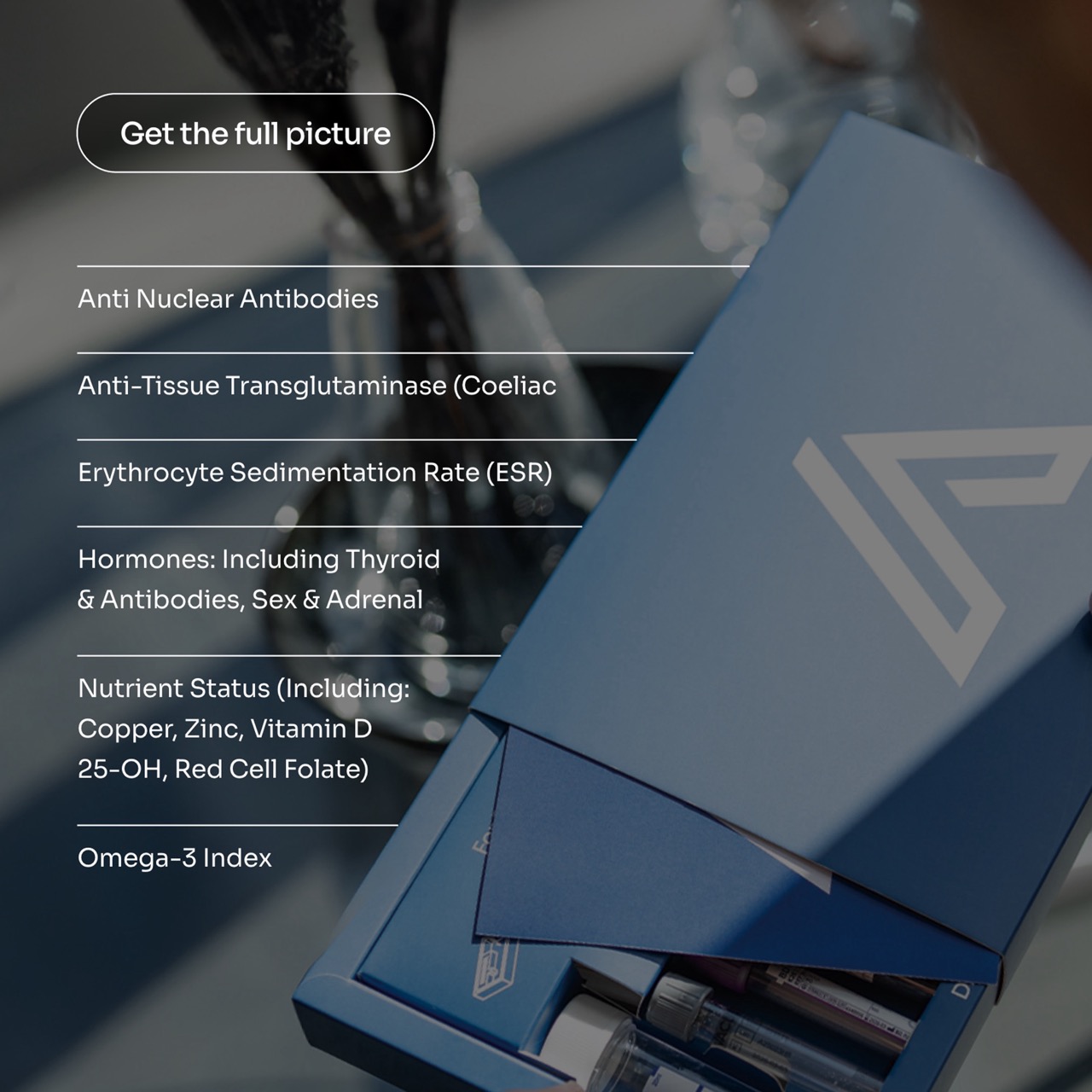
Anti Nuclear Antibodies
Anti-Tissue Transglutaminase (Coeliac
Erythrocyte Sedimentation Rate (ESR)
Hormones: Including Thyroid & Antibodies, Sex & Adrenal
Nutrient Status (Including: Copper, Zinc, Vitamin D 25-OH, Red Cell Folate)
Omega-3 Index
Choose a test location:
What's included in the test?
This test includes a total of 63 Health Markers.
- Full Blood Count13
- Iron Status5
- Liver Health7
- Diabetes Health3
- Thyroid Health5
- Hormonal Health8
- Lipids (Cholesterol Test)5
- Adrenal (Stress) Health2
- Omega 3 Index6
- Nutritional Health8
- Inflammation & Autoimmunity3
- Full Blood Count13
- Iron Status5
- Liver Health7
- Diabetes Health3
- Thyroid Health5
- Hormonal Health8
- Lipids (Cholesterol Test)5
- Adrenal (Stress) Health2
- Omega 3 Index6
- Nutritional Health8
- Inflammation & Autoimmunity3
-
Haemoglobin
An iron-containing protein within red blood cells responsible for transporting oxygen.
-
Mean Cell Haemoglobin (MCH)
A measurement of the average amount of haemoglobin in a single red blood cell.
-
Mean Corpuscular Haemoglobin Concentration (MCHC)
A measurement of haemoglobin concentration in a red blood cell relative to the cells volume.
-
Mean Cell Volume (MCV)
A measurement of the mean size of red blood cells.
-
Red Blood Cells
A component of blood that carries oxygen and carbon dioxide around the body.
-
Basophils
A type of immune white blood cell, found in the blood with enzymes that are released during allergic reactions.
-
Eosinophils
A type of immune white blood cell that releases enzymes in response to gastrointestinal infection, allergic reaction.
-
Lymphocytes
A type of immune white blood cell, found in the blood and in lymph tissue.
-
Monocytes
A type of immune white blood cell that travel through the blood to kill micro-organisms and remove dead cells.
-
Neutrophils
A type of immune white blood cell that has an important role in the immune system and helps the body fight bacterial infection.
-
White Blood Cells
A component of blood that are part of the body’s immune system, helping the body fight infection and disease.
-
Platelets
A component of blood that prevent bleeding and allow blood to clot.
-
Hematocrit
A measurement of the volume of red blood cells compared to the total blood volume (red blood cells and plasma).
-
Iron
A mineral the body needs to make haemoglobin, a substance in the blood that carries oxygen from the lungs to the body.
-
Ferritin
A protein that binds to iron and stores it for use by the body.
-
Transferrin
A protein that transports iron through the blood to various tissues, such as the liver, spleen, and bone marrow.
-
Transferrin Saturation
Transferrin saturation is a calculated marker that shows the percentage of iron-binding sites on transferrin currently occupied by iron, helping to assess iron availability and screen for iron deficiency or iron overload.
-
Total Iron Binding Capacity (TIBC)
A Total Iron Binding Capacity (TIBC) blood test measures how well your blood can carry iron. It assesses the amount of transferrin, a protein in your blood that binds to and transports iron throughout your body.
-
Ferritin
A protein that binds to iron and stores it for use by the body.
-
Alanine Aminotransferase (ALT)
ALT is an enzyme found mostly in the liver which helps the liver break down proteins to make them easier for your body to absorb.
-
Albumin
Albumin is a protein found in the plasma of blood, albumin carries substances such as hormones, medicines, and assists with neutralisation of free radicals.
-
Alkaline Phosphatase (ALP)
ALP is an enzyme found in the bloodstream. It helps break down proteins in the body and exists in different organs.
-
Aspartate Aminotransferase (AST)
An enzyme found in your liver, heart, muscles, and a few other parts of the body, to help process amino acids.
-
Gamma-Glutamyltransferase (GGT)
GGT is an enzyme found in the liver that helps with the metabolism of substances in the body.
-
Total Bilirubin
A measurement of the amount of the substance bilirubin, produced during the breakdown of red blood cells.
-
Glucose
A blood glucose test is used to find out if your blood sugar levels are in a healthy range. It can be used to help diagnose and monitor diabetes.
-
HbA1c
An HbA1c blood test, also known as a glycated hemoglobin test, is a blood test that measures your average blood sugar levels over the past 2-3 months.
-
Insulin
Insulin is a hormone that your pancreas makes. It helps move blood glucose (blood sugar) from your bloodstream into your cells where it’s used for energy. Testing measures the amount of insulin, the hormone that lets cells take in glucose.
-
Thyroid Stimulating Hormone (TSH)
TSH is produced by the pituitary gland in the brain, acts on the thyroid gland to regulate thyroid hormone production.
-
Free Thyroxine (FT4)
T4 is a thyroid hormone responsible for many bodily functions including (but not exclusive to) the metabolism, mood, body temperature.
-
Free Tri-iodothyronine (FT3)
T3 is a thyroid hormone. It plays an important role in the body’s control of metabolism (the many processes that control the rate of activity in cells/tissues.
-
Anti-Thyroglobulin Antibody (AntiTg)
An anti-Tg (antithyroglobulin) blood test measures the level of antibodies in your blood that target thyroglobulin.
-
Anti Thyroid Peroxidase Antibody (Anti-TPO)
TPO plays an important role in the production of thyroid hormones. A TPO test detects for thryoid related autoimmune disorders.
-
Follicle Stimulating Hormone (FSH)
Female: In females, FSH helps control the menstrual cycle and the production of eggs by the ovaries.
Male: In males, follicle stimulating hormone helps control the production and maintenance of sperm cells.
-
Luteinising Hormone (LH)
Female: In females, LH stimulates the ovaries to produce oestradiol, triggering ovulation and development of the corpus luteum.
Male: In males, Luteinising hormone stimulates Leydig cells in the testes to produce testosterone, which acts locally to support sperm production.
-
Oestradiol (E2)
Female: In females, oestradiol interacts with the hypothalamus and pituitary gland to control the development of the follicle, ovulation and the menstrual cycle.
Male: Oestradiol is a form of oestrogen, in men it is essential for modulating libido, erectile function, and spermatogenesis.
-
Progesterone
Female: Progesterone is a sex hormone produced in the adrenal glands and ovaries, it plays an important role in regulating menstruation and pregnancy.
Male: Progesterone is a sex hormone produced by adrenal glands and testes in males, necessary for spermatogenesis binds testosterone
-
Prolactin
Female: Prolactin is a hormone responsible for lactation, breast development, and hundreds of other actions needed to maintain normal bodily function.
Male: Prolactin is a sex hormone produced by the pituitary gland, typically exists in low levels in men.
-
Sex Hormone Binding Globulin (SHBG)
Female: Sex hormone binding globulin (SHBG) is a protein that transports androgens and oestrogens in the blood and regulates their access to target tissues.
Male: Sex hormone binding globulin (SHBG) is a protein that transports androgens and oestrogens in the blood and regulates their access to target tissues.
-
Total Testosterone
Female: Testosterone is produced in the ovaries and adrenal glands, it regulates many bodily processes including: fertility, libido, muscle mass, fat distribution.
Male: Testosterone is produced in the testes and adrenal glands, it regulates fertility, muscle mass, strength, libido, fat distribrution.
-
Free Androgen Index
Free Androgen Index (FAI) is a calculated ratio of total testosterone to sex hormone-binding globulin (SHBG), used to estimate the amount of biologically active (free) testosterone available in the body.
-
HDL
Commonly known as ‘good’ cholesterol, HDL carries LDL (bad) cholesterol away from the arteries and back to the liver.
-
LDL
Commonly known as ‘bad’ cholesterol, LDL is a fat that circulates in the blood, moving cholesterol around the blood stream.
-
Total Cholesterol
A total cholesterol blood test measures the overall amount of cholesterol in your blood, including both HDL and LDL cholesterol.
-
Triglycerides
A type of fat that is the most common type of fat in the blood, used by the body for energy.
-
Total Cholesterol / HDL Cholesterol Ratio
Total Cholesterol / HDL Cholesterol Ratio is a calculated marker that compares your total cholesterol to your “good” HDL cholesterol, helping to assess overall cardiovascular risk and the balance between protective and potentially harmful lipoproteins.
-
Cortisol
Cortisol is a steroid hormone, often referred to as a ‘stress’ hormone – that regulates a wide range of vital processes throughout the body, including metabolism and the immune response.
-
Dehydroepiandrosterone Sulphate (DHEAs)
DHEA-S is a hormone produced by the adrenal glands, which plays an important role in testosterone and oestrogen production.
-
Omega-3 Index Complete
The Omega-3 Index is a blood test that measures the amount of omega-3 fatty acids (EPA and DHA) in red blood cell membranes.
-
Omega 3:6
An omega-6 to omega-3 ratio is an important health marker because it can indicate the level of inflammation in your body, with a high ratio (more omega-6 than omega-3) potentially contributing to chronic inflammation
-
Trans Fat Index
-
AA
-
AA:EPA
-
EPA
-
Albumin
Albumin is a protein found in the plasma of blood, albumin carries substances such as hormones, medicines, and assists with neutralisation of free radicals.
-
Vitamin B12
A vitamin B12 blood test measures the total amount of vitamin B12 in your blood. It’s used to diagnose and monitor vitamin B12 deficiency.
-
Magnesium
A mineral in the body that is needed hundreds of processes to keep the body healthy.
-
Vitamin D - 25OH
A 25-hydroxyvitamin D (25(OH)D) blood test, also known as a vitamin D test, measures the level of vitamin D in your blood. This test is the most accurate way to determine your overall vitamin D status.
-
Red Cell Folate
A red cell folate blood test measures the amount of folate (Vitamin B9) stored in your red blood cells. Red cell folate levels provide a more reliable indicator of the body’s overall folate stores over time compared to serum folic acid tests.
-
Calcium (Adjusted)
A way of measuring the calcium in our blood more accurately by taking your albumin level into account of how much usable calcium is in your blood.
-
Copper
A copper blood test measures the amount of copper in your blood. Copper is an essential mineral, but both deficiency and excess can cause health problems.
-
Folic Acid
Measures the amount of folate (vitamin B9) in your blood. This test is used to assess your folate levels, which are crucial for various bodily functions like red blood cell formation, DNA synthesis, and cellular repair.
-
Erythrocyte Sedimentation Rate (ESR)
Erythrocyte Sedimentation Rate (ESR) is a test that detects inflammation in the body. It measures how quickly red blood cells settle at the bottom of a test tube – faster rates can indicate inflammation from infections, autoimmune disease and other health issues.
-
Anti-Tissue Transglutaminase Antibodies
An anti-tissue transglutaminase (tTG) blood test is a key part of diagnosing coeliac disease. It measures the levels of tTG antibodies in the blood, which are produced when the body reacts to gluten in people with coeliac disease.
-
Antinuclear Antibodies
An antinuclear antibody (ANA) blood test is a diagnostic tool used to detect the presence of antibodies in the blood that attack the body’s own cells and tissues, specifically those targeting the cell nucleus – typically seen in autoimmune disorders.
Explore Our Other Tests
Why not explore our other tests, or take our quiz to find whats right for you
