



£105.00
Extended Lipids (Cholesterol)
Our extended cholesterol test allows you to gain a deeper insight into your cardiovascular risk than traditional lipid profiles alone.
Whether you’re managing an existing condition, have a family history of heart disease, or simply want to take a proactive approach, this test can help guide lifestyle changes, inform treatment decisions, and support long-term heart health.
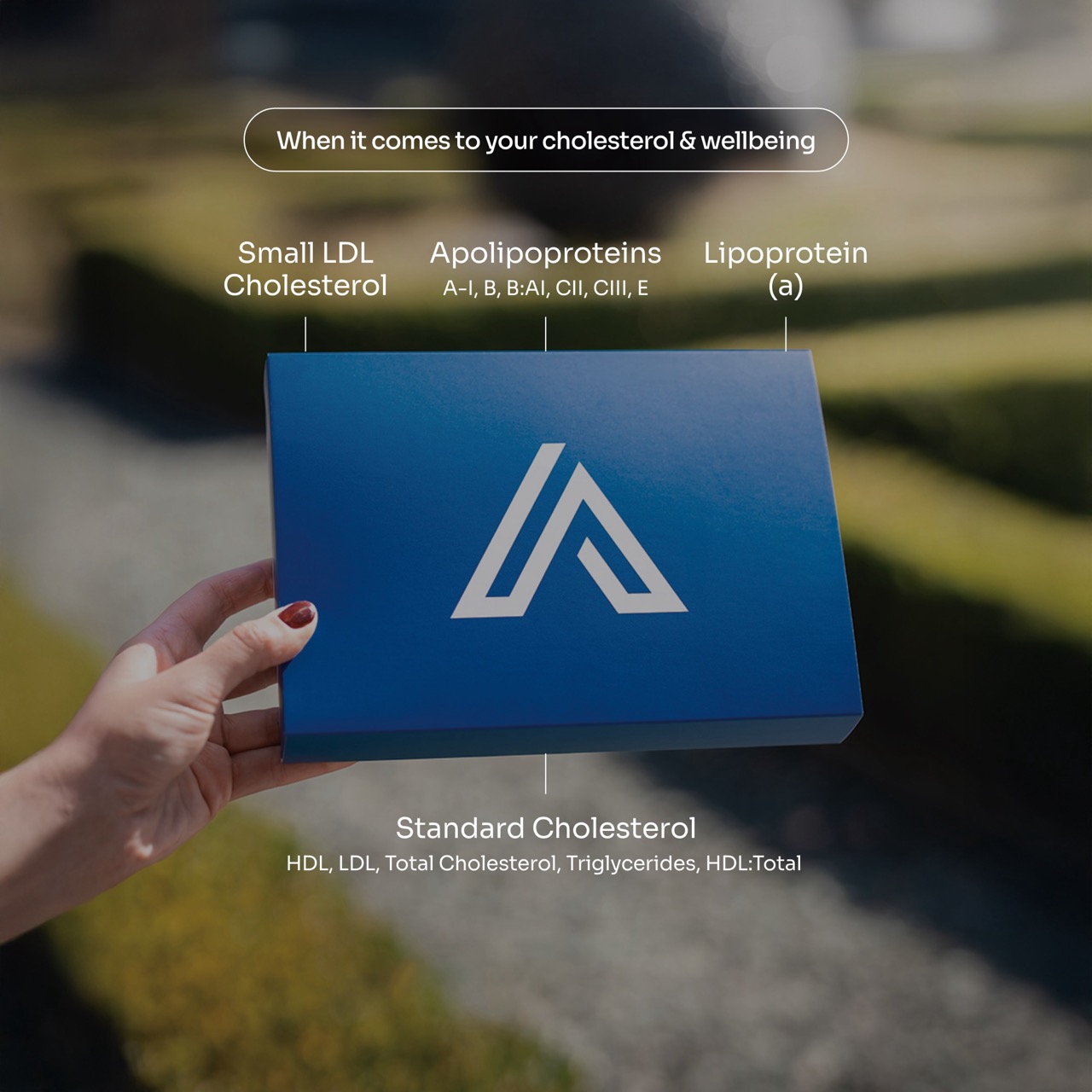
- Standard Cholesterol
- Lipoprotein (a)
- Apolipoproteins A-I, B, B:AI, CII, CIII, E
- Small LDL Cholesterol
Choose a test location:
What's included in the test?
This test includes a total of 11 Health Markers.
- Other Biomarkers11
-
Total Cholesterol
A total cholesterol blood test measures the overall amount of cholesterol in your blood, including both HDL and LDL cholesterol.
-
LDL
Commonly known as ‘bad’ cholesterol, LDL is a fat that circulates in the blood, moving cholesterol around the blood stream.
-
HDL
Commonly known as ‘good’ cholesterol, HDL carries LDL (bad) cholesterol away from the arteries and back to the liver.
-
Triglycerides
A type of fat that is the most common type of fat in the blood, used by the body for energy.
-
Apolipoprotein A-I
Apo A1 is a major component of HDL cholesterol and is involved in removing excess cholesterol from the body.
-
Apolipoprotein B
ApoB is a protein essential for carrying cholesterol and other fats throughout your body – with high levels are associated with an increased risk of cardiovascular disease and LDL.
-
Apolipoprotein CII
ApoC-II is a protein involved in the breakdown of fats (triglycerides) in the bloodstream.
-
Apolipoprotein CIII
Apo C-III is an important protein involved in triglyceride metabolism, Elevated levels are linked to increased risk of cardiovascular disease
-
Apolipoprotein E
Apolipoprotein E is a protein involved in the breakdown of fats. ApoE test can help identify the role of genetic factors in cardiovascular disease.
-
Small LDL Cholesterol
This test measures the different subfractions of lipids, such as low-density lipoprotein (LDL), high-density lipoprotein (HDL), and very low-density lipoprotein (VLDL).
-
Lipoprotein (a)
Lipoprotein (a) helps carry cholesterol through your bloodstream to your cells. High Lp(a) levels are associated with increased risk of atherosclerosis (plaque buildup in arteries), heart attacks, and strokes.
Explore Our Other Tests
Why not explore our other tests, or take our quiz to find whats right for you


