Menstrual Cycle 101: Phases, Hormones and What Your Cycle Is Telling You
Everything you need to know about your cycle - and what it says about your health.
15 Feb 2026

Quick Facts
• Your menstrual cycle includes every day between periods – not just bleeding days.
• It’s regulated by brain-ovary-uterus signalling, involving Oestrogen, Progesterone, FSH and LH.
• The cycle has two coordinated systems: the ovarian cycle (egg development) and the uterine cycle (lining preparation).
• Regular ovulation is a key marker of hormonal and metabolic health.
• Changes in your cycle can reflect stress, inflammation, nutrient status, thyroid function, or insulin balance.
The Menstrual Cycle: More Than Just Your Period
When people talk about the menstrual cycle, periods tend to take centre stage.
But bleeding is just one outcome of a much larger monthly process — one that influences how your body produces energy, manages stress, regulates mood, clears hormones, and supports long-term reproductive and metabolic health.
Because of this, medical bodies now recognise the menstrual cycle as a vital sign — offering insight similar to blood pressure or heart rate.
Paying attention to your cycle isn’t just about fertility. It’s about understanding your health as a whole.
What Is the Menstrual Cycle?
The menstrual cycle is controlled by a complex interaction between the brain, ovaries and hormones, which regulate ovulation and prepare the body for potential pregnancy.
The menstrual cycle begins on the first day of bleeding and ends the day before the next period starts. It’s governed by two overlapping systems:
• The ovarian cycle: controls egg development and ovulation
• The uterine cycle: controls the build-up and shedding of the uterine lining
Both cycles are synchronised by hormonal signals from the hypothalamus and pituitary gland in the brain — making your cycle a direct reflection of your wider hormonal health.
The Four Phases of the Menstrual Cycle
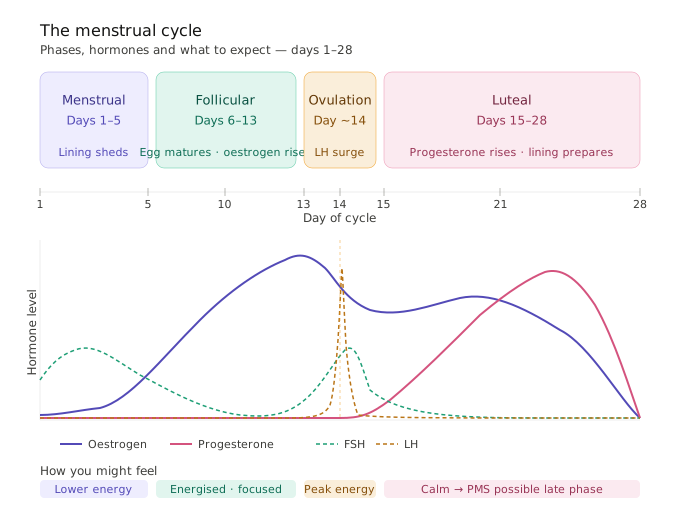
Phase 1: Menstrual Phase (Days 1–5)
This is the phase most people are familiar with. When oestrogen and progesterone drop, the uterine lining sheds – this is your period.
Average blood loss is around 60ml.
Consistently heavy bleeding is worth investigating, as it may indicate fibroids, endometriosis, or hormonal imbalance.
Phase 2: Follicular Phase (Days 1–13)
The follicular phase overlaps with menstruation and continues until ovulation. The brain releases FSH (follicle-stimulating hormone), stimulating the ovaries to develop follicles. One dominant follicle matures and oestrogen begins to rise.
How you might feel: As oestrogen increases, many people notice improved focus, energy, motivation, and mood. This is often the phase where you feel most like yourself.
Phase 3: Ovulation (Around Day 14)
Ovulation occurs when a surge in LH (luteinising hormone) triggers the release of a mature egg.
This is your fertile window – lasting around 5–6 days. Ovulation doesn’t always happen on day 14; it typically occurs 10–16 days before your next period.
Ovulation is also a sign that the brain–ovary axis is functioning well.
When cycles are anovulatory (no egg released), it can indicate hormonal disruption worth investigating.
Phase 4: Luteal Phase (Days 15–28)
After ovulation, the empty follicle becomes the corpus luteum and begins producing progesterone. This hormone stabilises the uterine lining in preparation for potential implantation.
If pregnancy doesn’t occur, progesterone and oestrogen fall — triggering the next period.
How you might feel: Initially calm and grounded. As hormone levels decline in the final days, lower energy, mood changes, and PMS symptoms may emerge — particularly if progesterone is low or inflammation is present.
What Is a Normal Menstrual Cycle?
Typical patterns include:
• Cycle length: 21–35 days
• Period length: 2–7 days
• Ovulation occurring in most cycles
• Manageable symptoms that don’t significantly disrupt daily life
Consistency over time matters more than hitting exact numbers.
A cycle that varies by a day or two each month is entirely normal. One that varies by more than 7–9 days consistently may be worth investigating.
When Cycle Changes Are a Signal Worth Investigating
Cycle disruption can reflect a range of underlying factors, including:
• Chronic stress or overtraining
• Insulin resistance or blood sugar dysregulation
• Thyroid dysfunction (both hypo and hyperthyroidism)
• Nutrient depletion — particularly iron, B12, folate, and vitamin D
• Conditions such as PCOS or endometriosis
Irregular, absent, painful, or emotionally disruptive cycles are signals – not inconveniences. They deserve to be taken seriously.
Why Tracking Your Menstrual Cycle Matters
Tracking your cycle allows you to:
• Spot early hormonal shifts before they become problematic
• Time blood testing accurately for more meaningful results
• Identify patterns in energy, mood, sleep, and symptoms
• Advocate more effectively in healthcare settings
We often combine cycle tracking with hormone biomarker testing to build a clearer picture of your hormonal health – helping you move from symptom management to root-cause clarity.
Get a Clearer Picture of Your Hormonal Health
If your cycle feels irregular, symptomatic, or simply something you want to understand better, a hormone blood test can provide valuable insight.
Our Women’s Health and Female Fertility testing kits measure key hormones including oestrogen, progesterone, FSH, LH, and testosterone – giving you the data to understand what’s really going on across your cycle.
Frequently Asked Questions
How long is a normal menstrual cycle?
A normal menstrual cycle typically lasts between 21 and 35 days, with the average being around 28 days. What matters most is consistency – a cycle that varies significantly from month to month may be worth discussing with a healthcare professional.
What hormones control the menstrual cycle?
The menstrual cycle is primarily regulated by four hormones: oestrogen, progesterone, FSH (follicle-stimulating hormone), and LH (luteinising hormone).
These are produced by the brain and ovaries and work together to coordinate ovulation and prepare the uterus each cycle.
What is the luteal phase?
The luteal phase is the second half of your menstrual cycle, beginning after ovulation and lasting until your next period. During this phase, progesterone rises to prepare the uterus for potential implantation. If pregnancy doesn’t occur, progesterone falls and menstruation begins.
Can stress affect my menstrual cycle?
Yes. Chronic stress raises cortisol levels, which can suppress the hormonal signals needed for ovulation. This can lead to irregular cycles, missed periods, or worsened PMS symptoms.
Addressing stress, sleep, and nutrition often has a meaningful impact on cycle regularity.
When should I be concerned about my menstrual cycle?
Speak to a healthcare professional if you experience very heavy or prolonged bleeding, cycles that are consistently shorter than 21 or longer than 35 days, severe pain that disrupts daily life, or periods that stop without an obvious reason such as pregnancy or menopause.
Latest Insights
Stay up to date with latest research, tips and trends in health and nutrition.