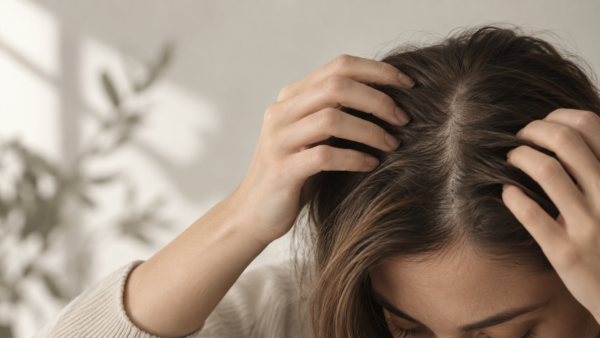
Hormones and Hair Loss: What Your Hair Could Be Telling You About Your Health
Hair loss is often treated as a problem of the hair itself.
A new shampoo. A supplement. A serum. A treatment designed to stimulate the follicle.
But sometimes, what is happening on the scalp reflects something happening elsewhere in the body.
4 Sep 2026
Quick Facts:
- Hair loss affects both men and women, although the pattern and underlying drivers can differ.
- Hair responds slowly. Increased shedding can become noticeable weeks or months after the original hormonal, nutritional or physiological trigger.
- High testosterone is not required for androgen-related hair loss. Genetics, DHT production and individual follicle sensitivity all influence the response.
- Female pattern hair loss can occur even when circulating androgen levels are within the expected range.
- Both underactive and overactive thyroid function can be associated with diffuse hair thinning or shedding.
- Iron deficiency is a recognised potential contributor to hair loss, making ferritin and wider iron status important to consider in the right clinical context.
- Hormones are only part of the picture. Significant weight loss, low energy availability, illness, medication changes and nutritional deficiencies can all disrupt normal hair cycling.
- There is no single blood test that diagnoses the cause of hair loss. The pattern of hair loss, associated symptoms and medical history should determine what is investigated.
Hormones influence the hair growth cycle. So can thyroid function, metabolic health, nutrient availability, illness, inflammation and periods of significant physiological stress.
And because hair responds slowly, the shedding or thinning you notice today may relate to a change that occurred weeks — or even months – earlier.
For both men and women, investigating hair loss properly means asking a more useful question:
What could be driving the change in the first place?
Hair loss is a symptom, not a diagnosis
Some degree of daily hair shedding is completely normal. It is estimated that we naturally lose around 50-100 hairs each day.
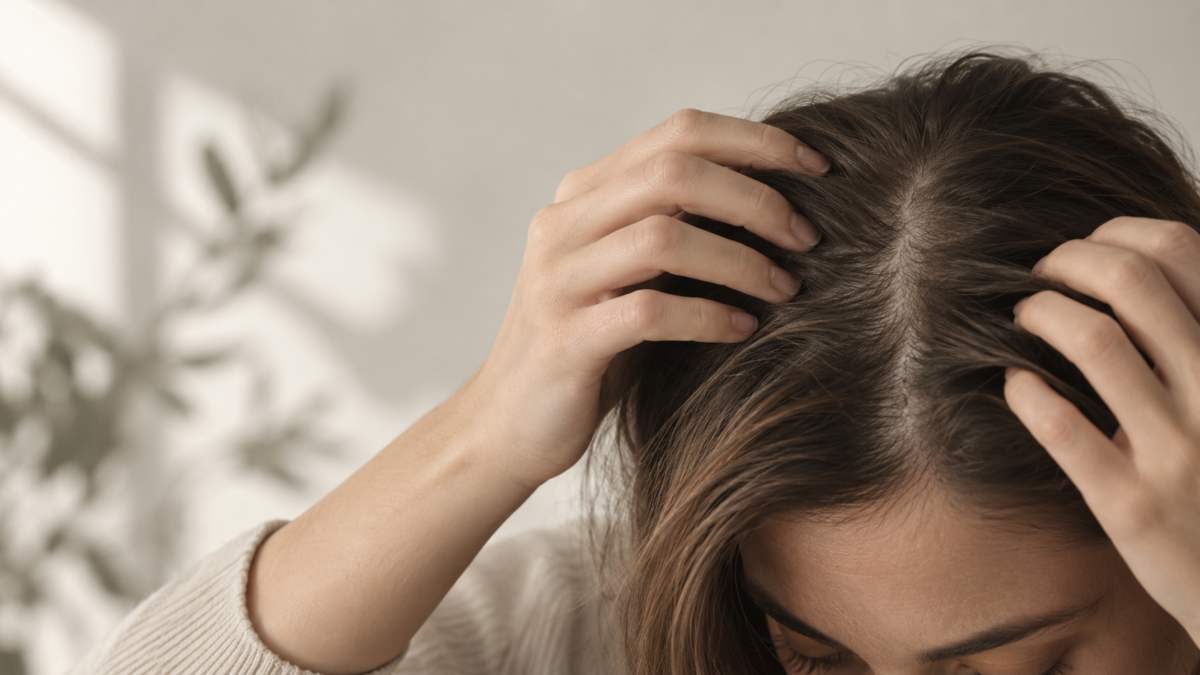
Hair loss becomes more significant when there is a noticeable change from your usual pattern: increased shedding, widening of the parting, recession around the temples, thinning at the crown, a reduction in overall density or patches of hair loss.
Importantly, there isn’t one single form of hair loss.
Common presentations include:
- Male pattern hair loss
- Female pattern hair loss
- Telogen effluvium, characterised by increased diffuse shedding
- Alopecia areata
- Hair loss secondary to illness, medication or nutritional deficiency
- Scarring forms of alopecia
These do not all have the same underlying mechanism – and they should not all be investigated or treated in the same way.
How does the hair growth cycle work?
Hair follicles continuously move through different stages.
- Anagen: the active growth phase.
- Catagen: a short transitional phase.
- Telogen: the resting phase.
- Exogen: when the hair is eventually released and shed.
At any one time, different follicles are at different points within this cycle.
Hormonal changes, nutritional deficiencies, illness and physiological stress can alter that balance and cause more follicles to leave the growth phase or enter the resting and shedding phases.
This is one reason hair loss can feel delayed.
In telogen effluvium, for example, increased shedding can occur approximately two to three months after a physiological trigger.
That trigger might have been an illness, significant weight loss, surgery, childbirth, nutritional deficiency or another period of substantial physiological stress.
Testosterone, DHT and patterned hair loss
When people hear “hormonal hair loss”, testosterone is often the first hormone that comes to mind.
But testosterone itself is only one part of the picture.
Testosterone can be converted by the enzyme 5-alpha reductase into dihydrotestosterone, more commonly known as DHT.
In genetically susceptible scalp follicles, androgen signalling – particularly involving DHT – can contribute to progressive follicular miniaturisation.
In simple terms, affected follicles begin producing progressively finer and shorter hairs.
Over time, that becomes visible as thinning.
The role of DHT is particularly well established in male pattern hair loss. In women, the relationship is more complex: female pattern hair loss can occur even when circulating androgen levels are entirely normal.
What does hormonal hair loss look like in men?
Male pattern hair loss commonly affects:
- The temples
- Frontal hairline
- Crown
- Vertex of the scalp
The pattern is strongly influenced by genetics and how susceptible an individual’s follicles are to androgen signalling.
This distinction matters.
Hair loss does not automatically mean testosterone is too high.
Two men can have similar circulating testosterone concentrations and very different patterns of hair loss because follicle sensitivity, genetics and local androgen metabolism also matter.
Simply lowering testosterone is therefore not an appropriate conclusion to draw from hair loss alone.
What does hormonal hair loss look like in women?
Female pattern hair loss can look different.
Rather than the classic receding hairline commonly associated with men, women may notice:
- A widening central parting
- Reduced density over the top of the scalp
- Diffuse thinning
- Increasing scalp visibility
- A smaller ponytail circumference
- The frontal hairline is often relatively preserved.
And while androgen excess can contribute to hair loss in some women, many women with female pattern hair loss have normal androgen levels.
This is why testing testosterone alone does not provide a diagnosis.
Where hair loss occurs alongside other features of androgen excess – such as increased facial or body hair, persistent acne or menstrual irregularity – investigation of the wider androgen picture may become more relevant.
Testosterone is only part of the androgen picture
When androgen status is clinically relevant, looking at testosterone concentration in isolation may miss important context.
Total testosterone
This measures the total amount of testosterone circulating within the blood.
SHBG
Sex hormone-binding globulin (SHBG) binds strongly to sex hormones, including testosterone.
Changes in SHBG can therefore alter the proportion of testosterone that remains available to tissues.
Free Testosterone
Free testosterone represents the small proportion of testosterone that is not bound to SHBG or albumin.
Depending on the clinical picture, androgen investigation may include markers such as:
- Total testosterone
- SHBG
- Calculated free testosterone or free androgen index
- DHEA-S
- Androstenedione
But these results need context.
The presence or absence of hair loss cannot be predicted from a single hormone result, and circulating blood concentrations do not directly measure how sensitive an individual scalp follicle is to androgen signalling.
What about oestrogen and hair loss?
Oestrogen is another piece of the hair growth puzzle.
Oestrogens interact with the hair cycle and are thought to support maintenance of the anagen, or growth, phase.
This may help explain why some women notice significant changes in their hair during periods of hormonal transition.
Examples include:
- After childbirth
- During perimenopause
- Following menopause
- During significant menstrual disruption
- Following changes to hormonal medication
Postpartum hair shedding is a particularly clear example of the delayed relationship between hormonal change and visible hair loss.
Similarly, falling oestrogen levels during menopause coincide with changes in the hair cycle, although the relationship between oestrogen, androgens and female pattern hair loss remains more complex than a simple “low oestrogen causes hair loss” explanation.
Where can DUTCH hormone testing fit into a hair-loss investigation?
For most people presenting with unexplained hair loss, a comprehensive dried urine hormone test would not automatically be the first investigation.
Blood testing is generally better suited to answering many of the initial questions around thyroid function, iron status, blood count, vitamin status and circulating sex hormones.
However, there are selected cases where a more detailed assessment of hormone production and metabolism can provide additional context.
The DUTCH – Dried Urine Test for Comprehensive Hormones – Complete assesses sex hormones and their metabolites alongside cortisol and cortisone patterns. It includes information on oestrogens, progesterone, testosterone, DHEA-S and downstream hormone metabolites rather than looking solely at the circulating concentration of one hormone at one moment in time.
Looking beyond Testosterone alone
For androgen-related hair changes, one of the potential advantages of DUTCH testing is the additional information it provides around androgen metabolism.
This can include testosterone, DHEA-S, DHT and other androgen metabolites.
That does not tell us how sensitive an individual hair follicle is to DHT – and it cannot diagnose androgenetic alopecia – but it can add another layer of information in a complex hormonal presentation.
This may be more relevant where hair loss sits alongside symptoms such as:
- Acne
- Changes in body or facial hair
- Menstrual irregularity
- Changes in libido
- Suspected androgen excess
- Changes associated with hormone replacement therapy
- Other signs suggesting a broader sex-hormone disturbance
DUTCH Complete includes a broader profile of androgen and sex-hormone metabolites than a standard isolated serum testosterone measurement.
Understanding Oestrogen Metabolism
DUTCH can also provide information about oestrogen metabolites and the pathways through which oestrogens are being metabolised.
This may provide additional context in selected women experiencing hair changes alongside:
- Perimenopause or menopause
- Menstrual changes
- Symptoms of oestrogen excess or deficiency
- Hormone replacement therapy
- Other complex hormone-related symptoms
It is important to distinguish this from simply asking whether someone’s oestrogen is “high” or “low”.
Urinary metabolite testing looks at a different component of hormone physiology from a standard serum oestradiol result. One does not universally replace the other.
Cortisol patterns and physiological stress
Stress is frequently blamed for hair loss, but the relationship requires more nuance.
Significant physiological or psychological stress can contribute to telogen effluvium, where a greater number of follicles shift into their resting and subsequent shedding phase.
DUTCH Complete measures free cortisol and cortisone across different points of the day alongside urinary cortisol metabolites, providing information about the daily pattern and overall metabolism of cortisol.
For cases where hair shedding is occurring alongside symptoms such as fatigue, disturbed sleep or a prolonged period of significant stress, this can offer supplementary information about the wider picture.
It should not, however, be used to diagnose an “adrenal fatigue” condition or replace appropriate investigation where adrenal disease is suspected.
What about DUTCH Plus?
DUTCH Plus contains the components of DUTCH Complete but adds salivary measurements used to assess the Cortisol Awakening Response (CAR).
The CAR describes the rise in cortisol that normally occurs shortly after waking.
This can give clinicians further information about the morning component of the cortisol rhythm when that information is relevant to the wider presentation.
Again, this would generally be an additional layer of investigation rather than a first-line test specifically for hair loss.
Other markers within DUTCH Complete
DUTCH Complete also reports selected organic-acid markers alongside melatonin and an oxidative-stress marker.
These can provide supplementary metabolic information, but they should not be treated as replacements for established blood investigations.
For example, if iron deficiency is suspected, we would still want to assess ferritin and appropriate iron studies rather than attempt to infer iron status from a urine hormone test.
Similarly, a urinary organic-acid marker should not automatically replace conventional assessment of vitamin status when deficiency is suspected.
When might My Atlas consider DUTCH?
A DUTCH assessment may be considered when hair loss forms part of a more complex hormonal presentation, particularly where the clinical question extends beyond whether one circulating hormone is high or low.
It may add useful context where there are:
- Multiple hormone-related symptoms
- Menstrual or reproductive-hormone disturbance
- Signs of altered androgen activity
- Perimenopausal or menopausal symptoms
- Hormone replacement therapy requiring broader hormonal context
- Significant sleep, fatigue and stress-related symptoms alongside hormone concerns
- Previous blood testing that has not fully explained a more complex endocrine presentation
But importantly:
More detailed testing does not automatically mean more useful testing.
For many people, a carefully selected blood profile and appropriate clinical or dermatological assessment will provide the more logical starting point.
At My Atlas, the aim is therefore not to choose the biggest test.
It is to choose the test that best answers the clinical question.
Thyroid hormones and hair loss
The connection between thyroid function and hair is well recognised.
Both hypothyroidism and hyperthyroidism can be associated with hair changes, including diffuse thinning and increased shedding.
Thyroid hormones interact with activity within the hair follicle, and altered thyroid function can affect normal progression through the hair cycle.
Hair loss may be particularly worth investigating alongside symptoms such as:
- Fatigue
- Unexplained weight changes
- Feeling unusually cold or hot
- Changes in bowel habits
- Menstrual disturbance
- Changes in heart rate
- Dry skin
- Changes in mood or concentration
Depending on the clinical situation, thyroid investigation may include:
- TSH
- Free T4
- Free T3
- Thyroid Antibodies – Anti-TPO, Anti-Tg
Importantly, blood tests are there to answer a clinical question – not simply to generate as many results as possible.
Can insulin resistance affect hair?
Metabolic and reproductive hormones do not operate independently.
Insulin can influence SHBG and sex-hormone regulation, meaning metabolic dysfunction can alter the wider hormonal environment.
This relationship is particularly relevant in conditions such as polycystic ovary syndrome (PCOS), where insulin resistance and androgen excess may coexist.
A woman presenting with thinning scalp hair alongside acne, increased facial hair and irregular menstrual cycles, for example, has a very different clinical picture from someone experiencing sudden diffuse shedding after an illness.
In men, metabolic health also interacts with testosterone regulation, body composition and wider endocrine health.
This does not mean that insulin resistance is responsible for every case of hair loss.
It means that when other metabolic signs and symptoms are present, markers such as fasting glucose, HbA1c and, where appropriate, insulin can add useful context to the wider investigation.
Prolactin: relevant in selected cases
Prolactin is not a routine “hair loss hormone”.
However, persistently elevated prolactin can disrupt signalling through the hypothalamic-pituitary-gonadal axis and consequently alter normal reproductive hormone function.
It may therefore be worth considering where hair changes occur alongside other relevant symptoms, such as menstrual disturbance, galactorrhoea, reduced libido or signs of altered gonadal hormone function.
Again, the principle is the same:
Test according to the clinical picture rather than testing every hormone simply because hair loss is present.
Sometimes the problem isn’t hormonal at all
This is arguably the most important part.
Hair loss may coexist with hormonal changes without those hormones being the primary cause.
The NHS recognises illness, stress, weight loss and iron deficiency among the potential causes of temporary hair loss.
Other nutritional or physiological factors may also need consideration depending on the individual’s diet, symptoms and medical history.
Iron and ferritin
Iron status deserves particular attention when investigating unexplained diffuse shedding.
Iron deficiency can cause hair loss, and the symptom can occur alongside tiredness, reduced exercise tolerance, breathlessness, restless legs or other signs of deficiency.
Ferritin reflects stored iron and is commonly considered alongside:
- Full blood count
- Serum iron
- Transferrin
- Total Iron Binding Capacity (TIBC)
- Transferrin saturation
However, ferritin needs interpretation in context. It can also rise in response to inflammation, infection and other physiological processes.
And supplementation should be based on evidence of need rather than the assumption that everybody experiencing hair loss requires more iron.
Vitamin B12 and Folate
Both nutrients are required for normal cell division and blood-cell production.
Testing may be particularly relevant where hair loss occurs alongside fatigue, dietary restriction, gastrointestinal symptoms, macrocytosis or other features suggesting possible deficiency.
Vitamin D
Vitamin D status is sometimes investigated as part of a wider hair-loss assessment, particularly where deficiency risk is high.
A low result should still be viewed as one component of the overall clinical picture rather than automatically assumed to be the sole explanation for hair loss.
Zinc
Zinc is involved in numerous cellular and enzymatic processes.
Deficiency can contribute to hair changes, but indiscriminate zinc supplementation is not without consequences — excessive intake can interfere with copper absorption.
Testing and supplementation should therefore remain targeted.
The overlooked factor: low energy availability
You can have an apparently “healthy” diet and still be consuming too little energy for your body’s requirements.
Significant calorie restriction, rapid weight loss and low protein intake can represent a physiological stressor.
When energy availability falls, the body prioritises essential physiological functions.
Maintaining maximal hair growth is not one of them.
This makes nutritional history particularly relevant for people who have recently:
- Dieted aggressively
- Lost a significant amount of weight
- Completed an intense competition preparation
- Dramatically increased exercise
- Experienced appetite suppression
- Followed a restrictive diet
- Been unable to eat normally because of illness
If hair shedding begins several months later, the connection may not immediately be obvious.
So, which blood tests should you consider for hair loss?
There isn’t one universal “hair loss blood test”.
The appropriate investigation depends on the pattern of hair loss, age, sex, symptoms, medical history, medication, diet and examination findings.
Depending on the individual, clinically appropriate blood testing may consider:
General health
- Full blood count
- Liver function
- Kidney function
- CRP or other inflammatory markers where indicated
Iron and nutrient status
- Ferritin
- Iron studies
- Vitamin B12
- Folate
- Vitamin D
- Zinc where clinically appropriate
Thyroid
- TSH
- Free T4
- Further thyroid markers where clinically indicated
Hormonal investigation
- Total testosterone
- SHBG
- Calculated free testosterone / free androgen index
- DHEA-S
- Androstenedione
- Oestradiol where appropriate
- Prolactin where appropriate
Metabolic health
- HbA1c
- Glucose
- Insulin where clinically appropriate
- Lipid profile
That doesn’t mean everybody experiencing hair loss needs every marker on this list.
More testing is not automatically better testing.
The aim should be to choose markers capable of answering a meaningful clinical question.
What blood tests cannot tell you
This distinction is important.
Blood testing can help identify potential systemic contributors to hair loss, such as iron deficiency or thyroid dysfunction.
It cannot diagnose every form of alopecia.
Pattern, distribution, scalp appearance, speed of progression and associated symptoms remain extremely important.
Some presentations require clinical examination by a GP or dermatologist, and occasionally further dermatological investigation.
You should seek medical assessment particularly where hair loss is:
- Sudden or rapidly progressive
- Occurring in distinct patches
- Associated with scalp pain, inflammation, scaling or significant itching
- Associated with scarring
- Accompanied by other unexplained symptoms
- Affecting the eyebrows or other areas of body hair
- Causing significant concern
Don’t treat the hair in isolation
Hair is visible.
The systems influencing it aren’t.
For some people, the primary driver will be genetic androgen sensitivity.
For someone else, it may be thyroid dysfunction.
Another person may be dealing with iron deficiency, significant weight loss or a temporary telogen effluvium following illness.
And for others, several factors may overlap.
That is why the most useful question isn’t:
“Which supplement grows hair?”
It is:
“Why has my hair changed?”
Men and women can experience different patterns of hair loss, but the underlying principle is the same.
Look at the history.
Look at the pattern.
Look at the wider symptoms.
And where clinically appropriate, use testing to investigate the systems that could be contributing.
Don’t just treat what you can see. Investigate what might be driving it.
Investigating hair loss with My Atlas
At My Atlas, we believe blood testing should create context — not simply produce numbers.
Where hair loss may have an underlying hormonal, nutritional, thyroid or metabolic component, targeted blood testing can help build a clearer picture of what is happening internally.
Results should then be interpreted alongside symptoms, medical history, lifestyle and the pattern of hair loss itself.
Because when it comes to your health, one isolated biomarker rarely tells the whole story.
Test with context. Understand the pattern. Take the right next step.
Frequently Asked Questions
Can hormones really cause hair loss?
Yes.
Hormones are involved in regulating the hair-growth cycle, and changes in thyroid hormones, androgens and reproductive hormones can contribute to certain forms of hair loss.
However, hair loss is not automatically hormonal. Genetics, iron status, nutrition, illness, medications and physiological stress are also important potential contributors.
Does high testosterone cause hair loss?
Not necessarily.
Androgenetic hair loss is strongly influenced by genetic follicle sensitivity to androgen signalling, particularly DHT.
Someone can therefore experience male or female pattern hair loss while their circulating testosterone remains within the expected range.
Conversely, having a relatively high testosterone result does not mean that somebody will inevitably lose their hair.
Is DHT the main hormone responsible for male pattern baldness?
DHT plays a major role in androgenetic alopecia in genetically susceptible men.
DHT binds to androgen receptors within susceptible scalp follicles and contributes to progressive follicular miniaturisation.
However, genetics and individual follicle sensitivity are fundamental parts of the process – which is why serum hormone levels alone cannot determine who will develop male pattern hair loss.
Can women experience DHT-related hair loss?
Yes, androgen signalling can contribute to hair loss in women.
However, female pattern hair loss is more complex and many affected women do not have elevated circulating androgen levels.
Where hair thinning occurs alongside acne, increased facial or body hair or irregular menstrual cycles, further androgen investigation may be particularly relevant.
Can low oestrogen cause hair loss?
Changes in oestrogen can influence the hair cycle, particularly during major hormonal transitions such as postpartum, perimenopause and menopause.
It would be overly simplistic, however, to assume that every woman experiencing hair loss has “low oestrogen”.
The wider reproductive hormone picture, age, symptoms, hair-loss pattern and other potential causes all need consideration.
Can thyroid problems cause hair loss?
Yes.
Both hypothyroidism and hyperthyroidism can be associated with diffuse hair thinning or increased shedding.
If hair loss occurs alongside symptoms such as fatigue, temperature intolerance, unexplained weight changes, bowel changes or menstrual disruption, thyroid function may be particularly important to investigate.
Can low ferritin cause hair loss even if haemoglobin is normal?
It is possible to have depleted iron stores before overt iron-deficiency anaemia develops.
This is why haemoglobin alone does not provide a complete assessment of iron status.
Where iron deficiency is suspected, ferritin and appropriately selected wider iron studies can provide considerably more context.
What blood tests are useful for unexplained hair loss?
There is no universal profile for everyone.
Depending on symptoms and medical history, investigation may include:
- Full blood count
- Ferritin and iron studies
- TSH and Free T4
- Vitamin B12 and folate
- Vitamin D
- Zinc where appropriate
- Testosterone and SHBG
- DHEA-S or androstenedione where indicated
- Prolactin where indicated
HbA1c and glucose
Additional investigations based on the individual presentation
The aim should be targeted investigation, rather than testing every available biomarker.
Can stress make your hair fall out?
Yes.
Significant physical or psychological stress can act as a trigger for telogen effluvium.
One of the confusing aspects is that the increased shedding often does not begin immediately. Hair loss may become noticeable several weeks or months after the triggering event.
Can dieting cause hair loss?
Significant calorie restriction, rapid weight loss, inadequate protein intake and low energy availability can all act as physiological stressors and may contribute to increased hair shedding.
This is particularly important when assessing hair changes following aggressive dieting, bodybuilding preparation, major weight loss or prolonged appetite suppression.
Is DUTCH testing useful for hair loss?
It can be useful in selected cases, but it is not a hair-loss diagnostic test.
DUTCH testing provides more detailed information about sex-hormone and cortisol metabolism than standard blood hormone testing alone. It may therefore add context where hair loss occurs as part of a broader or more complicated hormonal presentation.
For many people, however, standard blood testing for areas such as iron status and thyroid function, combined with assessment of the pattern of hair loss, represents the more appropriate starting point.
Should I take supplements for hair loss before getting tested?
Not automatically.
Iron, zinc and other nutrients are important for normal physiology, but taking large doses without establishing whether there is a deficiency can be unnecessary and, in some cases, harmful.
Testing can help establish whether there is actually something to correct before supplementation is started.
When should hair loss be assessed by a doctor or dermatologist?
Medical assessment is particularly important when hair loss is sudden, severe, rapidly progressing, occurring in distinct patches or associated with scalp inflammation, pain, scaling or scarring.
A dermatologist may also be required when the pattern cannot be explained through blood testing alone.
Blood tests investigate what may be happening internally. Examination tells us what is actually happening at the follicle and scalp. The two answer different questions.
Blood testing cannot diagnose every cause of hair loss and does not replace medical or dermatological assessment.
If you are experiencing unexplained, sudden, patchy or progressive hair loss, speak to an appropriately qualified healthcare professional.
Related Products
Here are some of our products relating to this topic.


Latest Insights
Stay up to date with latest research, tips and trends in health and nutrition.