Myo-Inositol and D-Chiro-Inositol: More Than a Hormone Supplement
Inositol is often discussed in relation to female hormones and PMOS.
But its biology starts much earlier than that.
We explore myo-inositol and D-chiro-inositol through insulin signalling, glucose regulation, SHBG, androgen availability and male and female reproductive health.
26 Aug 2026
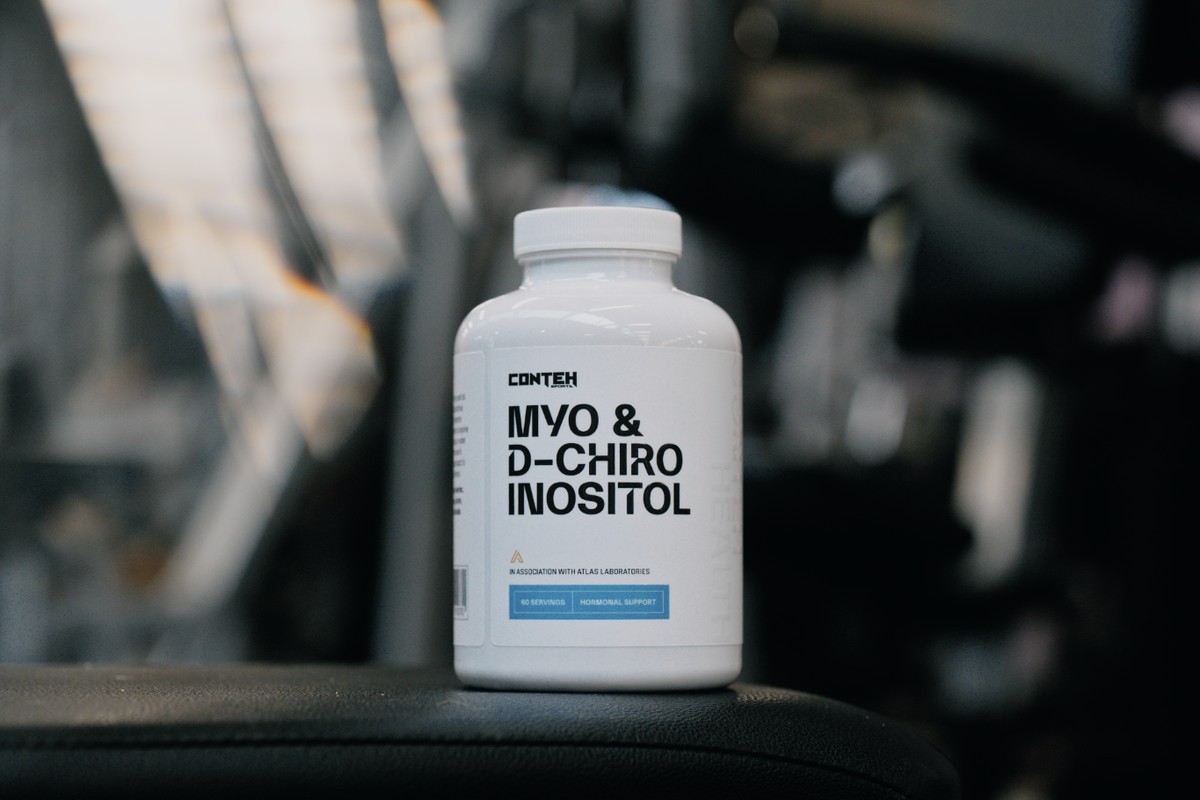
Inositol has developed a reputation as a “hormone supplement.”
Usually a female hormone supplement.
And very often, a PMOS supplement.
But that description misses a large part of the biology.
Myo-inositol and D-chiro-inositol are involved in cellular signalling pathways that interact with the body’s response to insulin – which means their potential relevance extends beyond ovarian hormones alone.
Glucose regulation.
Insulin sensitivity.
SHBG.
Androgen availability.
Ovarian signalling.
And even sperm function.
They are different systems.
But they aren’t necessarily separate ones.
So before asking whether inositol is “good for hormones”, there is a better place to start:
What does inositol actually do?
What is inositol?
Inositol is a naturally occurring compound found within the human body as well as in a variety of foods.
You may occasionally see it described as vitamin B8, although technically it isn’t considered an essential vitamin because the body can produce inositol itself.
There are several different forms, or stereoisomers, of inositol.
The two that receive the majority of attention in metabolic and reproductive research are:
- Myo-inositol (MI)
- D-chiro-inositol (DCI)
They aren’t identical compounds and shouldn’t necessarily be treated as interchangeable.
Both participate in cellular signalling pathways, including pathways involved in the body’s response to insulin.
And that’s where the conversation gets interesting.
Insulin has to be heard, not just made
Most people understand insulin in relation to blood sugar.
You eat.
Blood glucose rises.
The pancreas releases insulin.
Insulin then helps signal to tissues that glucose is available and facilitates its uptake, use and storage.
But producing insulin is only part of that process.
Cells also need to respond appropriately to the signal.
Think of insulin attaching to its receptor as delivering the message.
A series of intracellular signalling processes then helps carry that message further into the cell.
Inositol-derived compounds form part of these signalling systems.
This is one reason Myo-inositol and D-chiro-inositol have been investigated in conditions involving reduced insulin sensitivity and altered glucose metabolism.
Research across randomised controlled trials has reported reductions in measures including fasting glucose, fasting insulin and HOMA-IR following inositol supplementation, although responses vary considerably between populations and study designs.
And this matters for more than blood glucose.
Because insulin is not simply a blood-sugar hormone.
What happens when insulin sensitivity decreases?
When tissues become less responsive to insulin, the pancreas may compensate by producing more of it.
In very simplified terms:
↓ insulin sensitivity
↑ insulin requirement
↑ circulating insulin
→ wider metabolic and endocrine effects
For a period of time, higher insulin secretion may help maintain apparently acceptable glucose levels.
This is one reason somebody can have a “normal” fasting glucose or HbA1c while there are already changes occurring elsewhere within their metabolic physiology.
It is also why looking at glucose alone doesn’t always tell the complete story.
And one of the places metabolic health begins to overlap with reproductive endocrinology is SHBG.
Insulin, SHBG and Androgen Availability
Sex Hormone-Binding Globulin – or SHBG – is a protein produced predominantly by the liver.
It binds circulating sex hormones, including testosterone and oestradiol.
That binding matters because the total amount of testosterone within your circulation and the amount that is unbound and biologically available are not the same thing.
In simplified terms:
- Lower SHBG → potentially greater proportion of free testosterone
while:
- Higher SHBG → potentially smaller proportion of free testosterone.
SHBG itself is influenced by several physiological factors.
These include:
- Insulin and metabolic health
- Liver function
- Thyroid hormones
- Oestrogen exposure
- Androgen exposure
- Body composition
- Nutritional status.
Insulin resistance and hyperinsulinaemia are commonly associated with lower SHBG concentrations.
This creates an important connection between metabolic and hormonal health.
Because sometimes the better question isn’t simply:
“What is your testosterone?”
It is:
“How much of that testosterone is actually available?”
Can inositol increase SHBG?
This is one area where the evidence is becoming increasingly interesting – but context remains important.
Research in women with PMOS/PCOS has reported changes in SHBG, total testosterone, free testosterone and free androgen measures following inositol supplementation.
A 2026 systematic review and meta-analysis reported that inositol supplementation was associated with increased SHBG and reductions in total testosterone, calculated free testosterone and free androgen index. However, responses varied substantially between different metabolic phenotypes and study populations.
An umbrella review published in 2026 similarly found evidence supporting effects on SHBG, total testosterone, free testosterone and HOMA-IR, while highlighting variation in evidence quality across individual outcomes.
This distinction matters.
Inositol isn’t directly “blocking testosterone”.
Instead, changes in insulin signalling, hepatic SHBG production and reproductive endocrine pathways may influence the wider hormonal environment.
And this is particularly relevant when discussing PMOS.
Inositol and PMOS: where the association comes from
Inositol is probably best known for its use within polyendocrine metabolic ovarian syndrome (PMOS), formerly called polycystic ovary syndrome or PCOS.
There is a reason for that association.
Insulin resistance and compensatory hyperinsulinaemia can form an important part of PMOS physiology in many — although not all — individuals.
Insulin can interact with ovarian androgen production.
Higher insulin concentrations can also coincide with lower hepatic SHBG production.
Together, those mechanisms can contribute to greater androgen availability in susceptible individuals.
That creates an interconnected picture:
Altered insulin signalling
→ hyperinsulinaemia
→ altered SHBG
→ altered androgen availability
→ reproductive/endocrine effects
But PMOS is heterogeneous.
Not everybody with PMOS has the same degree of insulin resistance.
Not everybody has the same androgen pattern.
And not everybody will respond to an intervention in the same way.
Which is precisely why a personalised approach matters.
Is inositol proven to treat PMOS?
There is an important difference between saying:
“inositol has been studied in PMOS”
and saying:
“inositol treats PMOS.”
Current international evidence-based guidance states that inositol can be considered according to individual preferences, with some potential improvement in metabolic measures, while recognising that evidence for clinically meaningful outcomes remains limited.
For PMOS-associated infertility specifically, current international guidance remains more cautious and regards inositol as an experimental fertility therapy, because evidence around outcomes such as ovulation, clinical pregnancy and live birth remains uncertain.
That’s an important distinction in an area where supplements are frequently marketed with very definitive promises.
Biochemical improvement doesn’t automatically equal a clinical outcome.
A reduction in insulin.
An increase in SHBG.
A change in testosterone.
Or even a change in ovulatory markers.
These findings can be biologically interesting without automatically proving that somebody will conceive, lose weight, restore a menstrual cycle or resolve other symptoms.
Good science needs both sides of that conversation.
Myo-inositol vs D-chiro-inositol: what’s the difference?
Myo-inositol and D-chiro inositol are related, but they have different biological roles.
The body can convert myo-inositol into D-chiro-inositol through an enzyme-dependent process influenced by insulin signalling.
Both have been investigated in relation to glucose metabolism, insulin signalling and reproductive physiology.
However, the balance between them may matter.
Myo-inositol has attracted particular interest in relation to:
- Cellular glucose uptake
- Insulin signalling
- Ovarian function
- Follicle-stimulating hormone (FSH) signalling
- Oocyte development
- Sperm physiology.
D-chiro-inositol has been studied in relation to:
- Insulin signalling
- Glycogen metabolism
- Androgen and steroidogenic pathways.
This is also why many supplements don’t contain just one form.
They contain both myo-inositol and D-chiro-inositol.
What about the 40:1 myo-inositol to D-chiro-inositol ratio?
If you’ve researched inositol supplements, you’ve probably already seen the number:
40:1.
The 40:1 myo-inositol to D-chiro-inositol ratio is frequently marketed as the “physiological” or “optimal” ratio.
There is some research supporting it.
For example, a small randomised study comparing several ratios found the 40:1 combination performed favourably for ovulation and several hormonal and metabolic measures.
However, that study included just 56 participants across seven treatment groups — only eight people per group.
Other reviews have proposed benefits from combining myo-inositol and D-chiro-inositol in ratios around 40:1.
But here’s the important part:
That does not mean 40:1 has been conclusively established as the universally optimal ratio.
International evidence-based guidance currently states that there is insufficient high-quality evidence to recommend a specific inositol type, dose or combination for everyone with PMOS/PCOS.
So while 40:1 has a scientific rationale and some supporting research, it should not be presented as a biological rule.
That’s a very different claim.
Inositol isn’t just about female reproductive health
This is one of the parts of the inositol conversation that often gets lost.
The same compound predominantly marketed alongside women’s hormones has also been investigated in male reproductive health.
Particularly myo-inositol.
Sperm cells have substantial energy requirements, progressive motility depends heavily upon adequate mitochondrial function and cellular energy metabolism.
Myo-inositol has therefore been investigated in relation to:
- Total sperm motility
- Progressive sperm motility
- Mitochondrial function
- Sperm concentration
- Sperm DNA fragmentation
- Reproductive hormone concentrations.
A 2024 systematic review and meta-analysis examining 16 studies reported improvements in total sperm motility and progressive sperm motility following myo-inositol supplementation.
The analysis also reported a reduction in sperm DNA fragmentation and changes in testosterone concentrations. However, variation between studies – particularly for DNA fragmentation – means these results should be interpreted carefully rather than assuming every man will experience the same response.
Earlier experimental research has also demonstrated improvements in sperm progressive motility alongside changes in mitochondrial membrane potential in men with abnormal semen parameters.
Promising? Yes.
Proof that myo-inositol treats male infertility? No.
Those are two very different statements.
Inositol and Fertility: Markers aren’t outcomes
This is an important principle across both male and female reproductive health.
Improving a surrogate marker isn’t always the same thing as improving the outcome somebody ultimately cares about.
For example:
↑ sperm motility, doesn’t automatically mean:
↑ live birth rate.
And:
improved insulin sensitivity or ovulation, doesn’t automatically mean:
pregnancy will occur.
Fertility is influenced by multiple factors simultaneously.
That can include:
- Age
- Ovarian reserve
- Ovulation
- Tubal factors
- Endometrial factors
- Semen quality
- Sperm DNA integrity
- Endocrine health
- Genetics
- Metabolic health
- Lifestyle factors.
This is why supplements should sit within appropriate investigation rather than replace it.
Does inositol help with weight loss?
Inositol is not a weight-loss supplement.
And this is another area where expectations need to stay aligned with the evidence.
Improving insulin sensitivity can theoretically support aspects of metabolic health, but that doesn’t mean taking inositol directly causes meaningful fat loss.
Current international PMOS guidance specifically notes that while metabolic measures may improve, the evidence for clinically meaningful effects on weight remains limited.
Body composition remains influenced by energy intake, energy expenditure, sleep, physical activity, medication, endocrine health and numerous other factors.
A supplement cannot bypass that physiology.
What should you test if you’re considering inositol?
There isn’t one “inositol blood test.”
And testing isn’t required simply because somebody takes a nutritional supplement.
But if you’re taking inositol because you’re trying to address a specific metabolic, hormonal or reproductive concern, then understanding the physiology you’re trying to influence can provide considerably more context.
Glucose
Fasting glucose gives a snapshot of circulating glucose at that point in time.
Useful – but it doesn’t necessarily tell you how much insulin the body is producing to maintain it.
HbA1c
HbA1c provides an estimate of average glucose exposure over approximately the previous two to three months.
It can provide useful metabolic context alongside fasting glucose.
Fasting insulin
Fasting insulin can add another layer to the glucose picture where clinically appropriate.
For example, two people may have similar fasting glucose results while requiring very different amounts of insulin to maintain them.
SHBG
Particularly relevant when the reason for taking inositol relates to androgen availability or PMOS.
SHBG should not be interpreted in isolation, but it can materially change the interpretation of total testosterone.
Testosterone
Total testosterone can be assessed alongside SHBG and, where appropriate, calculated free testosterone or free androgen index.
This is particularly useful when investigating biochemical hyperandrogenism rather than simply looking at testosterone as a standalone marker.
LH and FSH
Where menstrual or reproductive health is the focus, luteinising hormone and follicle-stimulating hormone can provide additional information about hypothalamic-pituitary-ovarian signalling.
Their interpretation depends heavily on sex, age, menstrual-cycle stage and the wider clinical picture.
Oestradiol and Progesterone
Where ovulation or menstrual function is being investigated, timing matters.
A progesterone result without knowing where somebody is within their menstrual cycle can be considerably less useful.
Lipid profile
Insulin resistance and metabolic dysfunction frequently overlap with changes in triglycerides, HDL and other lipid markers.
That makes cardiovascular and metabolic context relevant too.
Liver function
The liver plays an important role in glucose and lipid metabolism and is also the primary site of SHBG production.
Thyroid function
Fatigue, menstrual changes, fertility concerns, weight changes and alterations in SHBG can also occur in thyroid dysfunction.
Similar symptom doesn’t automatically mean same cause.
Semen analysis
For men taking myo-inositol specifically because of fertility concerns, a semen analysis is much more directly relevant than trying to infer reproductive health from blood markers alone.
Depending on circumstances, further specialist assessment may also be appropriate.
One supplement. Multiple pathways. That is exactly why context matters.
This is where we come back to the bigger picture.
Someone may be taking inositol because they:
- Have PMOS
- Have been told they have insulin resistance
- Want to support glucose regulation
- Are investigating elevated androgens
- Have low SHBG
- Are trying to conceive
- Are investigating male fertility
- Have simply seen it recommended online.
Those aren’t the same physiological problem.
So they shouldn’t automatically lead to the same interpretation.
A supplement doesn’t tell us what is happening inside your body, whereas testing can help establish that context to know which supplementation routine is right in your own individualised context.
And repeating relevant markers over time can help distinguish between assuming something is working and actually seeing whether the physiology you’re interested in has changed.
Is inositol safe?
Inositol is generally considered well tolerated at commonly studied doses.
Reported side effects have tended to be gastrointestinal, including nausea, flatulence and diarrhoea, particularly at higher doses.
But “natural” doesn’t automatically mean appropriate for everybody.
Supplement quality, dose and formulation can vary, and current PMOS guidance specifically highlights that nutritional supplements do not necessarily have the same regulatory and quality-control requirements as medicines.
Anyone who is pregnant, breastfeeding, taking medication, managing an existing health condition or using inositol therapeutically should discuss supplementation with an appropriately qualified healthcare professional.
The My Atlas perspective
At My Atlas, we talk regularly about clinical context.
Because physiology doesn’t exist in isolated boxes.
Glucose influences insulin.
Insulin can influence SHBG.
SHBG changes the interpretation of testosterone.
Metabolic signalling interacts with reproductive signalling.
And reproductive health extends to both men and women.
That doesn’t mean every pathway can be “fixed” with one supplement.
It means we should understand the pathway we’re actually trying to influence.
Inositol isn’t simply a female hormone supplement.
And it isn’t automatically a fertility treatment.
It is a biologically active compound involved in signalling pathways that reach across metabolic and reproductive health — with an evidence base that is promising in some areas and still developing in others.
Which is exactly why context matters.
Test the physiology.
Understand the pathway.
Then make the decision.
Frequently Asked Questions (FAQs)
What is the difference between myo-inositol and D-chiro Inositol?
Myo-inositol and D-chiro-inositol are two different forms of inositol involved in cellular signalling.
Both participate in insulin-related pathways but appear to have distinct roles across glucose metabolism and reproductive physiology.
Is inositol only for women?
No. Although inositol is frequently marketed for PMOS and female fertility, myo-inositol has also been investigated in relation to male fertility, sperm motility, mitochondrial function and sperm DNA fragmentation.
Does inositol increase SHBG?
Some studies and meta-analyses in PMOS/PCOS populations have reported increased SHBG following inositol supplementation alongside changes in androgen markers. This doesn’t mean everybody will experience the same effect, and SHBG is influenced by several other metabolic, hepatic and hormonal factors.
Does inositol lower testosterone?
Research in women with PMOS/PCOS has reported reductions in total and free testosterone measures in some populations.
The response appears to vary according to phenotype and metabolic health, so inositol should not be considered a general testosterone-lowering supplement.
Does inositol improve insulin resistance?
Research has reported improvements in measures including fasting insulin and HOMA-IR in some populations.
However, insulin resistance is multifactorial, and inositol should not replace appropriate assessment, nutrition, physical activity, weight management or prescribed treatment where these are indicated.
Is a 40:1 myo-inositol to D-chiro-inositol ratio best?
The 40:1 ratio has been investigated and has some supporting clinical evidence.
However, current international guidance states that the available evidence is not sufficient to recommend a specific inositol form, dose or combination universally.
Can inositol help male fertility?
Myo-inositol has shown promising results for sperm parameters.
A 2024 systematic review and meta-analysis reported improvements in total and progressive sperm motility and a reduction in sperm DNA fragmentation.
More research is needed to determine how reliably these biochemical and semen changes translate into pregnancy and live-birth outcomes.
Can blood testing tell me whether inositol is working?
There isn’t a single test for this.
Relevant biomarkers depend on why inositol is being used. For metabolic health, glucose, HbA1c and potentially insulin may provide context.
For androgen-related concerns, SHBG and testosterone may be useful.
For reproductive health, additional hormone testing or semen analysis may be more appropriate.
Conteh Health × My Atlas
Related Products
Here are some of our products relating to this topic.


Latest Insights
Stay up to date with latest research, tips and trends in health and nutrition.
Myo-Inositol and D-Chiro-Inositol: More Than a Hormone Supplement
26 Aug 2026

Sleep Apnoea Is More Than Snoring: Risks, TRT, Weight, Genetics and the Bigger Health Picture
24 Aug 2026

Insulin Resistance: The Signs Your Blood Sugar Tests Might Be Missing
13 Aug 2026