At-Home Sperm Test: What Your Semen Analysis Is Actually Telling You
Male fertility is often treated as something to think about only when you're trying to have a baby.
In reality, sperm health can tell you much more than that.
14 Jun 2026
The Sperm You Produce Today Started Developing Around 74 Days Ago
The reality is that sperm health reflects much more than reproduction.
The sperm you produce today began developing around two and a half months ago. That means your current semen analysis is, in many ways, a snapshot of what your body has been experiencing over the last 74 days.
- Sleep
- Nutrition
- Exercise
- Stress
- Illness
- Hormonal and metabolic health
One bad week is unlikely to ruin your fertility.
One healthy week is unlikely to transform it either.
Sperm health is a long-term biomarker. It responds to consistent habits over time, which is one of the reasons semen analysis can be such a useful insight into overall wellbeing.
What Is an At-Home Sperm Test?
An at-home sperm test allows you to assess key semen parameters without attending a clinic.
Modern smartphone-based systems, such as the ExSeed Home Sperm Test, analyse the same core measurements used in routine semen analysis and provide results within minutes.
The process is straightforward:
- Collect a semen sample
- Prepare the testing slide
- Attach the device to your smartphone
- Allow the app to analyse the sample
The technology uses high-magnification imaging and AI-assisted analysis to measure the characteristics that matter most.
For many men, it offers a practical first step before considering more extensive fertility investigations.
What Does a Semen Analysis Measure?
Sperm Concentration
Concentration refers to the number of sperm present in each millilitre of semen.
According to the WHO 6th Edition reference ranges, the lower reference value is 16 million sperm per millilitre.
A lower concentration can have many causes, including hormonal imbalances, varicocele, previous illness, medications or lifestyle factors.
Sperm Motility
Motility describes how well sperm move.
This is divided into:
- Total motility: all moving sperm
- Progressive motility: sperm moving forwards in a purposeful direction
- Progressive motility is particularly important because sperm need to travel through the female reproductive tract to reach the egg.
Poor motility is one of the most common findings in male fertility investigations and is often influenced by lifestyle and general health.
Semen Volume
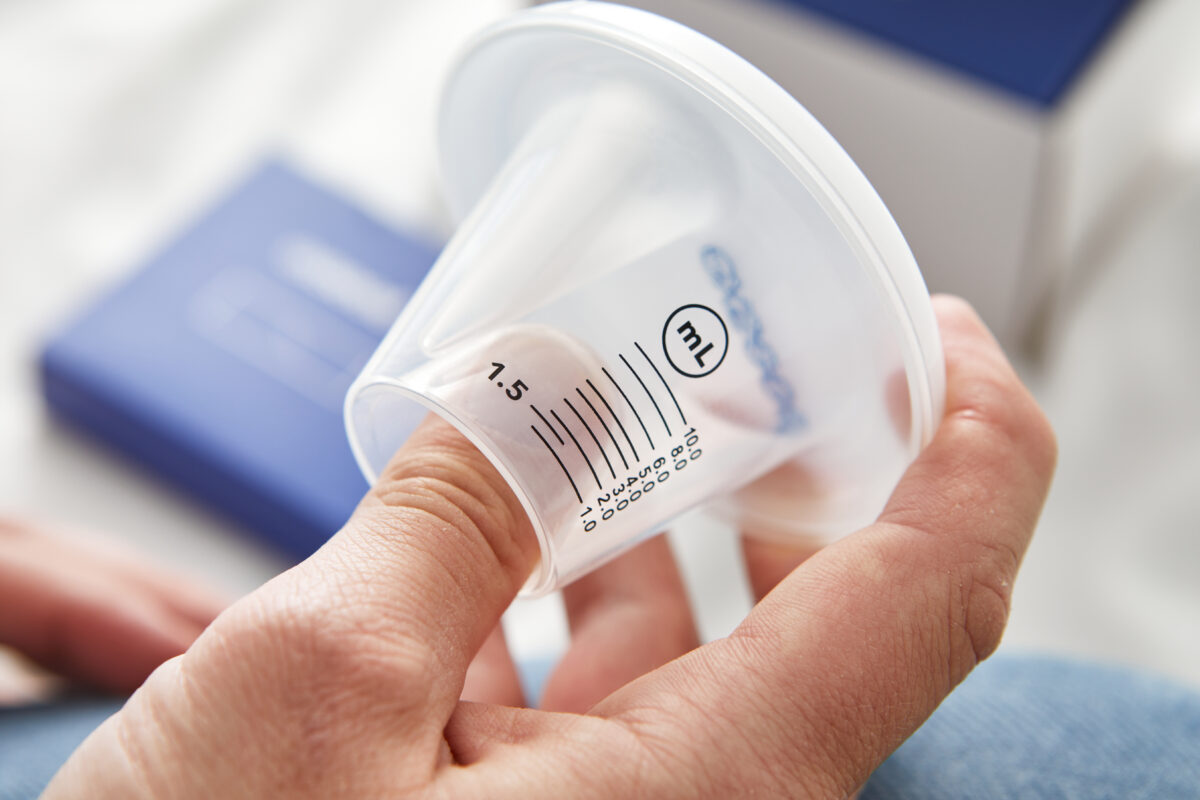
Volume refers to the total amount of fluid produced during ejaculation.
The WHO lower reference value is 1.4ml.
Both unusually low and unusually high volumes can provide useful clinical information and may affect overall fertility potential.
Why Does the 74-Day Timeline Matter?
Sperm production is a continuous process that takes around 74 days, followed by a further period of maturation.
The important point is not the biology itself, but what it means in practice.
If you’ve recently:
- Improved your diet
- Started exercising
- Reduced alcohol intake
- Prioritised sleep
- Recovered from illness
- Started supplementation
…you may not see the full benefit immediately.
Likewise, periods of high stress, poor sleep or fever may not affect a sperm test until several weeks later.
This delayed response is why fertility should be viewed as a long-term process rather than a single moment in time.
How Lifestyle Affects Sperm Quality
Research consistently shows that sperm health responds to everyday habits.
Sleep
Sleep supports normal testosterone production and hormonal regulation. Men who consistently sleep poorly often show less favourable semen parameters.
Nutrition
A diet rich in vegetables, fruit, legumes, fish and healthy fats has been associated with better sperm quality.
Nutrients that play important roles include:
- Zinc
- Selenium
- Folate
- Coenzyme Q10 (CoQ10)
- Vitamins C and E
- Exercise
Regular movement and resistance training can support hormonal health.
However, excessive endurance training without adequate recovery may have the opposite effect.
Stress
Chronic stress increases cortisol, which can interfere with the hormonal signalling involved in sperm production.
Fever and Heat
The testes operate below normal body temperature for a reason.
High fevers and repeated heat exposure from hot tubs, saunas or prolonged laptop use on the lap may temporarily reduce sperm quality.
Why We Think Sperm Health Is More Than Fertility
At My Atlas, we don’t see fertility as an isolated system.
Hormones, nutrition, inflammation, sleep, metabolic health and stress all interact with one another.
Semen analysis can provide another piece of that wider health picture.
Sometimes the goal is conception.
Sometimes it’s simply understanding how the body is functioning.
Both are worthwhile.
Who Should Consider an At-Home Sperm Test?
An at-home semen analysis may be useful if:
- You’re trying to conceive
- You want a baseline assessment of fertility
- You’ve experienced a significant illness or prolonged fever
- You’ve made lifestyle changes and want to track progress
- You’re interested in understanding your reproductive health
What Happens If Your Results Are Abnormal?
One result should never be viewed in isolation.
Natural variation is common, which is why repeat testing is often helpful.
If results remain outside expected reference ranges, the next step is to discuss them with own in house GP, your own GP or a fertility specialist, who may recommend a laboratory semen analysis or further investigations.
The Bottom Line
The sperm you produce today reflects the last couple of months of your health.
Your sleep.
Your nutrition.
Your stress.
Your recovery.
An at-home sperm test won’t answer every fertility question, but it can provide something many men never have: a meaningful baseline.
Because understanding your health is always better than guessing.
The ExSeed Home Sperm Test Kit is available through My Atlas, providing a simple way to assess sperm concentration, motility and volume from home and begin tracking what your body is telling you.
Latest Insights
Stay up to date with latest research, tips and trends in health and nutrition.

Insulin Resistance: The Signs Your Blood Sugar Tests Might Be Missing
13 Aug 2026

Homocysteine: The Cardiovascular Marker Often Missing From Routine Blood Tests
10 Aug 2026

Common Does Not Mean Normal: Understanding Women’s Health Symptoms That Deserve Attention
2 Aug 2026